Posted on Leave a comment

An amazing write-up for the Brandon Wright “Boiling Point” record from the Something Else Reviews music blog….

www.somethingelsereviews.com

Fresh, new talent worth listening to is often hard to spot. Good thing the folks at jazz label Posi-Tone Records specialize in bringing to our attention promising young talent who will keep the flame of jazz going for another generation. Their issuance yesterday of the first album by saxophonist Brandon Wright is the first step in a long, satisfying solo career, but it’s also another hopeful sign that jazz will remain vital and alive for years more to come.


Posted on Leave a comment

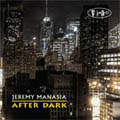
A new review of Jeremy Manasia – “After Dark” taken from the pages of jazzreview.com…

www.jazzreview.com

CD Title: After Dark

Year: 2009

Record Label: Posi-Tone Records

Style: Contemporary Jazz

Musicians: Jeremy Manasia (piano), Barak Mori (bass), Charles Ruggiero (drums), Ian Hendrickson-Smith (saxophone), Jane Monheit (vocals)

Review: The New York piano player Jeremy Manasia has put together a wonderful trio recording, After Dark. It features ten original Manasia compositions, a Cole Porter song “Just One Of Those Things”. The jazz standard “Soul Eyes” by Mal Waldron and “I’m Wishing” composed by Frank Churchill and Larry Morey. Joined by bassist Barak Mori and drummer Charles Ruggiero the trio lays down a classic bop inspired groove that swings, gets bluesy and touches a classical lilt. A favorite trio recording for 2009.

After Dark hits hard from the very first track. A Jeremy Manasia original composition entitled “Ruggburn” screams with delight as drummer Charles Ruggiero blasts out a thunderous rolling opener, seemingly insuring the alertness of the audience. The band jumps on board after four bars, they come on swinging, hot and heavy with lots of energy they pull each other back and forth in a dynamic tug of war that has each member displaying gifted musical abilities. Manasia hits full sounding dark chords, he mumbles in the background (reminiscent of Bud Powell), he adds fills, sustain, time and space. Playing melody, all the while swinging incessantly and running the keyboard with sweet sounding notes – the song progresses through a rhythmic bass solo by Barak Mori returns to a verse and builds to close in dynamic fashion repeating the melody a couple of times the trio hits a downbeat and fades to the next song.

This is a well produced recording, great sound and a wonderful feel and for me most importantly, everything flows smoothly. When a guest artist is introduced you know it is still the same album the theme is on track. Ian Hendrickson-Smith is guesting on “Soul Eyes” he plays tenor saxophone and lays down smooth, grand, rounded tones in a west coast style, alla Stan Getz.

On the song “When You Smile” composed by Manasia and Ruggiero, Jane Monheit makes a guest appearance, same thing – everything flows beautifully. The feel is vibrant and uplifting, with Monheit adding her lead instrument, vocals, to compliment the trios depth of musicality. An excellent tune.

The classical overtones are heard in songs such as “Ria”, “Search For Moonlight” and “Bayside Reflections”. Perhaps contemporary classical is a more fitting description. Or even contemporary jazz. I personally like Ellington’s classification of music, “There are two kinds of music. Good music and the other kind.” After Dark fits into the category of the first kind, Good Music.

Tracks: Ruggburn, Arch Eyes, Ria, Search For Moonlight, Stepping Stones, Soul Eyes, When You Smile, Jake’s Dilemma, Bayside Reflections, I’m Wishing, Just One Of Those Things, Jerry’s Blues, Afterthought

Artist’s Website: http://www.jeremymanasia.com/index.html

Posted on Leave a comment

Ben Ratliff’s New York Times review of the Sam Yahel “Hometown” concerts at the Village Vanguard this week…..

A Jazz Pianist Who Has Honed His Style While Hiding in Plain Sight

by Ben Ratliff

Sam Yahel played his own song “Truth and Beauty” around the middle of his early set on Tuesday night at the Village Vanguard. In the past he’s recorded it on Hammond organ, in a different group, with saxophone and drums. Here he was playing it on the piano, with the bassist Matt Penman and the drummer Jochen Rückert, and it had a different personality: first more tense, with its crowded contrapuntal opening, then more permissive and abstract. Lots of space opened up. Mr. Yahel played straight notes over swung grooves and slow phrases over cruisingly fast bass and drums. The music felt suspended and comfortable, and kept its cool.

Mr. Yahel came to New York in 1990, starting music school as a pianist. Then he adapted to the organ, and a career quickly came into view: he had less competition. Many associate him with the organ, either in his own groups or touring with Joshua Redman and Brian Blade.

But he never gave up playing piano. About five years ago he started playing regular piano-trio gigs at Smalls, and after a few years of them he made a convincing piano-trio record, “Hometown,” which was recently released on Positone. As a result, he’s leading a band at the Vanguard for the first time.

The group is developed and ready, yet most of us are only hearing it now as it should have been heard long ago: on a good record and in the Vanguard’s sonic environment. Consequently, this band represents an undiscovered view of jazz from the recent past. It’s hard to talk about Mr. Yahel’s style, which weighs searching phrases against alert, melodic swing from the bebop tradition, without bringing up another pianist, Brad Mehldau. The two went through music school together, playing together a lot, and there are deep similarities — not only in the individual keyboard sound but in their strategies for piano trio as well.

The difference is that long ago Mr. Mehldau started playing hardball, stylizing his sound as he became relatively famous, and Mr. Yahel, even with his unusually sharp songwriting and smart arrangements, still sounds as if he’s having a casual good time. With Mr. Penman and Mr. Rückert, Mr. Yahel played versions of John Lennon’s “Jealous Guy,” Thelonious Monk’s “Think of One,” Cole Porter’s “So in Love” and the standard “My Ideal”; he also played another stately original, “Oumou,” inspired by the Malian singer Oumou Sangaré.

It was the details that mattered, both in what he did and didn’t do. More than once Mr. Yahel used the melody of the previous song as a spur for improvising in the present one, making the set feel interconnected. He was always temperate: in “Oumou,” when the rhythm collapsed in on itself, he kept the melody standing, playing a murmured, concentrated version of it. It was a wise set, sweeping and unpretentious.

Posted on Leave a comment

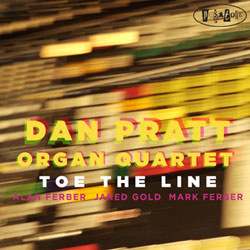
A nice AAJ piece featuring reviews of our latest Organ Jazz releases: Wayne Escoffery “Uptown” and the Dan Pratt Organ Quartet “Toe the Line”….

www.allaboutjazz.com

The State of Organ Jazz 2010, Part I: Wayne Escoffery, Dan Pratt and Matthew Kaminski
By C. Michael Bailey

Organ-based jazz inhabits a unique place as a sub-genre. The combination of the sacred churchy organ with the decadence of blues and bebop made for a heady brew after the introduction of the format by Wild Bill Davis and Bill Doggett in the 1950s. Qualitatively, the names that loom largest in organ jazz are Jimmy Smith, who put organ jazz on the map with his 1960s Blue Note and Verve recordings, and Larry Young, who picked up where Smith left off at Blue Note, propelling organ jazz into the fusion realm with drummer Tony Williams.

Besides being a firebrand, the organ rhythm section offers a grand alternative to piano and guitar setups. It provides an earthy sophistication, a hint of “soul jazz” as rich as bacon fat added to greens. In spring 2010, the market allows for several organ jazz releases of note. Here are three of them coming from Wayne Escoffery, Dan Pratt, and Matthew Kaminski.

Wayne Escoffery
Uptown
Posi-Tone Records
2010

Wayne Escoffery’s previous recordings, Times Change (Nagel Heyer Records, 2001), Intuition (Nagel Heyer Records, 2004), Veneration: Live at Smoke (Savant Records, 2007), Carolyn Leonhart & Wayne Escoffery—If Dreams Come True (Nagel- Heyer Records, 2007) and Wayne Escoffery & Veneration—Hopes & Dreams (Savant Records, 2008), established the saxophonist as a solid post bop musician with intelligent ideas and fine tonal form. His keen approach is sharpened in the organ trio format, where every edge and corner is visible.

This sharpness and precision in this format is made that much more keen by guitarist Avi Rothbard’s composing. “No Desert” and “Cross Bronx” are draftsman-angular pieces with accurate heads and orderly solos, all held together with the glue of Gary Versace’s organ. The real treat on the disc is a rollicking version of Duke Ellington’s “I Got it Bad,” where Escoffery swings so hard he changes the weather. Escoffery’s retro blues “Easy Now” is breezy with a gospel feel. “Nu Soul” breaks into adult contemporary terrain with a complex, assertive head. Escoffery is full-throated in his tenor tone and Versace all creamy warmth.

Uptown is an exciting release, a chance taken where the payoff is very finely performed music. Wayne Escoffery should return to this format in future recordings, but should not to over-do it, in case he makes the experience pedestrian.

Visit Wayne Escoffery on the web.

Dan Pratt Organ Quartet
Toe The Line
Posi-Tone Records
2010

Saxophonist Dan Pratt likes to fray those precise edges established by Wayne Escoffery, adding a bit of funky freedom to the mix. He also adds the competing trombone of Alan Ferber, rounding out the horn tone of the combo. Toe The Line is Pratt’s second recording, following Spring Loaded (Sunny Sky, 2004). It is a collection of eight Pratt originals and one standard (Ellington’s “Star Crossed Lovers”).

Pratt’s compositional bent tends to smart and wordy post bop. “Houdini” and “Minor Procedure” both are up-tempo burners with winding introductions. “Doppelganger” is an off-time blues that allows Pratt’s tenor to have contrapuntal relations with Alan Ferber’s trombone. The two unite for some slick and mantra-like ensemble play that oddly recalls saxophonist John Coltrane’s spiritual spasms without imitating them.

“Star Crossed Lovers” bisects the recital with a bona fide ballad treatment that recalls baritone saxophonist Gerry Mulligan and valve trombonist Bob Brookmeyer in a very modern way. Jared Gold provides a most modern organ solo that mixes well with Pratt’s and Ferber’s subsequent soliloquies. The closing piece, “After,” opens with a Pentecostal call-and-response that flirts with a ballad before crossing the blues with sanctified gospel, producing 21st century New Orleans R & B. This broadly appealing album has much to offer listeners, its coda being a part of jazz fans’ collective DNA.
Posted on Leave a comment

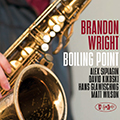
An insightful write-up of Brandon Wright “Boiling Point” by Dan Bilawsky…


Boiling Point
Brandon Wright | Posi-Tone Records (2010)

By Dan Bilawsky

The word tenor, in Latin, refers to “a continuous holding to a course,” and tenor saxophonist Brandon Wright does just that on Boiling Point. Whether Wright is engaging in a musical boxing match with trumpeter Alex Sipiagin or crooning over pianist David Kikoski on an established ballad, he always seems to maintain a consistent musical presence that transcends tempo, feel and style. Perhaps it’s his tone, which is big but not too brash and attractive, yet far from smooth, that ties it altogether. Regardless of what it is, Wright makes it work across these eight tracks.

Of course, some of the credit must also go to the rest of the band. Bassist Hans Glawischnig is the rock at the center of it all, making sure that everything lines up and is held together in just the right way. Drummer Matt Wilson, one of the most creative and enjoyable forces on the jazz scene today, has the rare ability to be fully interactive, while also maintaining his role as a key rhythmic element that locks in the time for the rest of the band. Kikoski occasionally shows a fondness for McCoy Tyner’s piano playing in his own sound, but he isn’t nearly as percussive as Tyner often was on his classic recordings. He also happens to have tremendous range as an artist and an incredible touch on the piano.

Sipiagin is the perfect frontline partner for Wright and he finds a good balance between bold and controlled. He creates some musical fireworks on Wright originals like “Odd Man Out” and “Castaway” but he can also turn it down a few notches for gentler material. While the aforementioned “Castaway” and the title track demonstrate Wright’s ability to write and play in a more aggressive manner, he works equally well in a more relaxed setting. His “Drift” sounds like it could have been an outtake from Herbie Hancock’s Maiden Voyage (Blue Note, 1965) and his performance on “Here’s That Rainy Day” is soothing and refined. His tone takes on a velvet-like quality here as he gently glides over Kikoski’s piano. While his playing often heats up the material on this album, it’s Brandon Wright’s ability to go from cool to hot and everything in between that proves to be his greatest strength on Boiling Point.

Track listing: Free Man; Drift; Odd Man Out; Boiling Point; Here’s That Rainy Day; Castaway; Interstate Love Song; You’re My Everything.

Personnel: Brandon Wright: tenor saxophone; Alex Sipiagin: trumpet; David Kikoski: piano; Hans Glawischnig: bass; Matt Wilson: drums.

Posted on Leave a comment

John Barron’s AAJ review of the new Brandon Wright CD “Boiling Point”….

www.allaboutjazz.com

by Josh Barron

Saxophonist Brandon Wright has spent the last few years making a name for himself on the New York jazz scene as both a sideman and bandleader. Since graduating from the University of Miami, the New Jersey native has performed with the Vanguard Jazz Orchestra, the Maria Schneider Jazz Orchestra and, most recently, has been touring with trumpeter Chuck Mangione. For Boiling Point, his debut as a leader, Wright teams-up with trumpeter Alex Sipiagin, pianist David Kikoski, bassist Hans Glawischnig and drummer Matt Wilson for a hard blowing set of swinging originals and familiar standards.

The disc gets off to a no-nonsense, straight-ahead start with Wright’s “Free Man,” a catchy minor blues with an imaginative solo turn from the thick-toned tenor man. Indeed, Wright’s big sound and technical precision enable him to deliver fresh, creative lines on his other boisterous compositions “Drift,” “Odd Man Out” and “Castaway.” Throughout the recording, Wright demonstrates an understanding of stylistic sensitivity, moving gracefully from an aggressive, no-holds-barred approach on his raucous title track to the tender, lyrical rendering of “Here’s That Rainy Day.”

Sipiagin shares front line duty with an equally free-wheeling approach, blowing trumpet solos that are at once conscious of traditional and progressive music. Kikoski’s energetic soloing and punchy piano comping serves the music well. With taste and a deft touch, the pianist lives up to his acclaimed reputation as a first-rate sideman. The rock-solid support of Glawischnig and Wilson add fervor to this dynamic debut full of engaging sounds.

Track listing: Free Man; Drift; Odd Man Out; Boiling Point; Here’s That Rainy Day; Castaway; Interstate Love Song; You’re My Everything.

Personnel: Brandon Wright: tenor saxophone; Alex Sipiagin: trumpet; David Kikoski: piano; Hans Glawischnig: bass; Matt Wilson: drums.

Posted on Leave a comment

An insightful write-up of Brandon Wright “Boiling Point” by Dan Bilawsky…

Boiling Point
Brandon Wright | Posi-Tone Records (2010)

By Dan Bilawsky

The word tenor, in Latin, refers to “a continuous holding to a course,” and tenor saxophonist Brandon Wright does just that on Boiling Point. Whether Wright is engaging in a musical boxing match with trumpeter Alex Sipiagin or crooning over pianist David Kikoski on an established ballad, he always seems to maintain a consistent musical presence that transcends tempo, feel and style. Perhaps it’s his tone, which is big but not too brash and attractive, yet far from smooth, that ties it altogether. Regardless of what it is, Wright makes it work across these eight tracks.

Of course, some of the credit must also go to the rest of the band. Bassist Hans Glawischnig is the rock at the center of it all, making sure that everything lines up and is held together in just the right way. Drummer Matt Wilson, one of the most creative and enjoyable forces on the jazz scene today, has the rare ability to be fully interactive, while also maintaining his role as a key rhythmic element that locks in the time for the rest of the band. Kikoski occasionally shows a fondness for McCoy Tyner’s piano playing in his own sound, but he isn’t nearly as percussive as Tyner often was on his classic recordings. He also happens to have tremendous range as an artist and an incredible touch on the piano.

Sipiagin is the perfect frontline partner for Wright and he finds a good balance between bold and controlled. He creates some musical fireworks on Wright originals like “Odd Man Out” and “Castaway” but he can also turn it down a few notches for gentler material. While the aforementioned “Castaway” and the title track demonstrate Wright’s ability to write and play in a more aggressive manner, he works equally well in a more relaxed setting. His “Drift” sounds like it could have been an outtake from Herbie Hancock’s Maiden Voyage (Blue Note, 1965) and his performance on “Here’s That Rainy Day” is soothing and refined. His tone takes on a velvet-like quality here as he gently glides over Kikoski’s piano. While his playing often heats up the material on this album, it’s Brandon Wright’s ability to go from cool to hot and everything in between that proves to be his greatest strength on Boiling Point.

Track listing: Free Man; Drift; Odd Man Out; Boiling Point; Here’s That Rainy Day; Castaway; Interstate Love Song; You’re My Everything.

Personnel: Brandon Wright: tenor saxophone; Alex Sipiagin: trumpet; David Kikoski: piano; Hans Glawischnig: bass; Matt Wilson: drums.

Posted on

jazz.com weighs in Yotam Silberstein’s performance of “Cheryl”…

www.jazz.com

YOTAM SILBERSTEIN: CHERYL

TRACK

Cheryl

ARTIST

CD

Next Page (Positone PR8050)

Buy Track

Musicians:

Yotam Silberstein (guitar), Sam Yahel (organ), Willie Jones III(drums), Chris Cheek (tenor sax).

Composed by Charlie Parker

.

Recorded: Acoustic Recording, Brooklyn, New York, June 19, 2008

Silberstein 

RATING: 90/100 (learn more)

In a tune that shares the intensity and misdirections of Parker’s �Scrapple From The Apple,� Yotam Silberstein burns right through the changes. Supported by a muscular band that’s still very light on it’s feet, this young guitarist has a pile of ideas � and he employs them in a very natural way. So the angular passages, quickly shifting arpeggios, and comping breaks are not showy in the least, much like Mr. Parker himself.

While I do enjoy hearing that guitar negotiate those twisty runs, the episode of tradin’ fours that comes midsong is just too much fun to ignore. Coming off the guitar solo, tenor player Chris Cheek and organist Sam Yahel really get it on as Silberstein and drummer Willie Jones III keep up the swing. Tremendous.


Posted on Leave a comment

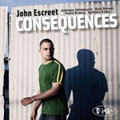
Take Five with John Escreet from allaboutjazz.com

escreet-consequencesallaboutjazz.com

Meet John Escreet:
Since moving to New York in 2006, John Escreet has had a powerful impact, and is emerging as one of the most creative and original pianists on the music scene there. He is highly revered amongst his peers for his creativity, openness and for his own original music, which draws inspiration from many different sources, and encompasses them all and much more. Escreet keeps himself busy by touring regularly across the United States, Canada, Europe and Asia. When not on the road, he resides in New York City, working on and performing his own original music, constantly challenging himself and searching for something new and original. In the summer of 2008 he graduated from the Master’s Program at Manhattan School of Music, where he studied piano with Kenny Barron and Jason Moran.

He leads his own group The John Escreet Project, which is described by The New York Times as “a superb band,” and which features some of the most exciting and forward-thinking improvising musical talents on the New York jazz scene—David Binney (alto saxophone), Ambrose Akinmusire (trumpet), Matt Brewer (double-bass) and Tyshawn Sorey (drums). John’s highly anticipated debut album with this group, Consequences, was released in September 2008 on the Posi-Tone label, and quickly received widespread critical acclaim, including being voted “Best debut of 2008” by All About Jazz New York. It is also described by All About Jazz as “a scintillating work of modern progressive jazz,” and by The New York Times as “a highly accomplished debut.”

John has worked frequently in David Binney’s regular group in NYC, and was also part of the world premier performance of the saxophonist’s new Big Band at The Jazz Gallery. In June 2007 John played a weekend engagement at Smalls Jazz Club in New York with his own group that featured Ari Hoenig (drums) and Adam Rogers (guitar).

John is also a member of a collective called The Story, which features some of the most exciting and creative young musicians in NYC—Lars Dietrich (alto saxophone), Samir Zarif (tenor saxophone), Zack Lober (double-bass) and Greg Ritchie (drums). Their debut album is released March 2009. John is also a member of The TransAtlantic Collective, which is a new contemporary jazz ensemble, whose members and collaborators are some of the top emerging artists from New York City and London.

John also occasionally leads a trio, which features bassist Orlando LeFleming, and drummer Rodney Green. Since being in NYC, John has also had the opportunity to perform with many other great musicians, including Wayne Krantz, Chris Potter, Seamus Blake, Will Vinson, Logan Richardson, Ben van Gelder, Marcus Gilmore, Dan Weiss and many more.

As well as performing at most of New York City’s major jazz venues, John has performed at important international jazz venues such as the Blue Note (Milan), Bimhuis (Amsterdam), Ronnie Scott’s (London), Upstairs (Montreal), and has also performed at major concert halls such as the Royal Albert Hall, the Purcell Room and the CBSO Centre. John is also active in jazz education, and has given clinics and workshops at institutions such as the Royal Academy of Music (London), Birmingham Conservatoire (Birmingham UK), McGill University (Montreal), Humber College (Toronto) and Loyola University (New Orleans).

Posted on Leave a comment

Here’s another review for our new Dan Pratt Organ Quartet record “Toe the Line” featuring Alan Ferber, Jared Gold, and Mark Ferber…

www.allaboutjazz.com

Toe the Line is a phrase which signifies unwavering obedience to a doctrine, structure, or rule, but the Dan Pratt Organ Quartet defies such a rule. The group conforms to the rule of playing with flair, but little else.

Pratt, who plays tenor saxophone, was a member of the Monterey Jazz Festival High School All-Star Band, and his professional career includes work with Joe Lovano, the Vanguard Jazz Orchestra, and the Christian McBride Big Band.

“Houdini,” the first of eight Pratt originals, opens with organ and drum laying down the rhythm. Pratt leads, echoed by Alan Ferber. The tenor and trombone harmonize, and at times they overlap each other. Shortly into the piece, Pratt takes off a bouncy, freestyle solo; Ferber solos as well. Throughout, organ and drums are in grooves of their own.

“Doppelganger” is aptly named. The term refers to the double of a living person—someone who bears a strong resemblance to another. The tenor begins a phrase and is joined by the trombone. At times, it’s difficult to tell which instrument is playing. Then the tenor plays the phrase at a higher tone. After the opening sequence, Alan Ferber and Pratt take turns with solos. Jared Gold’s organ serves not only as the rhythm instrument but also as the bass—a function it provides on all tracks. The horns revert to the opening phrase, playing without accompaniment at first. Then Mark Ferber joins in, skillfully playing snare, toms, and cymbals as if it were his solo. The song ends with sax and trombone harmonizing on the thematic phrase.

The lone cover, “The Star-Crossed Lovers,” is performed with as much vigor as Pratt’s compositions. The leads are solid, and the solos are engaging. In this sense, Toe the Line does conform to one rule: the musicians play from the heart.

Track listing: Houdini; Minor Procedure; Wanderlust; Doppelganger; The Star-Crossed Lovers; Toe the Line; Stoic; Uncle Underpants; After.

Personnel: Dan Pratt: tenor saxophone; Alan Ferber: trombone; Jared Gold: organ; Mark Ferber: drums.