Posted on Leave a comment

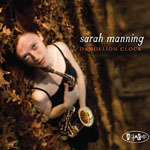
Some more coverage for Sarah Manning “Dandelion Clock” by the urbanflux blog….

theurbanflux.wordpress.com

Alto saxophonist Sarah Manning swings her way into the hearts and minds of jazz fans everywhere with “Dandelion Clock” available now from Posi-Tone. According to legendary jazz writer Nat Hentoff, “Manning plays – and writes – in what is unmistakably her own voice. Her singular dedication to developing that voice distinguishes her form her peers, and illuminates a path rife with intrigue.” Manning raises the bar with an exciting and bold program of original compositions and arrangements and takes us on an melodic adventure through a harmonic wonderland of her own creation.

Also traveling along on this musical journey are the sturdy and inventive rhythm section of pianist Art Hirahara, bassist Linda Oh and drummer Kyle Struve. This delightfully original session really swings and serious jazz fans will be captivated and amazed when Sarah Manning teaches everyone a new way to tell time by the “Dandelion Clock.”

Posted on Leave a comment

Audiophile Audition’s write-up for Sarah Manning “Dandelion Clock”….


Sarah Manning – Dandelion Clock – Posi-Tone

www.audad.com

In discovering her own voice in Jazz, Sarah Manning follows an unorthodox approach to expression.

Published on May 04, 2010

(Sarah Manning, alto saxophone; Art Hirahara, piano; Linda Oh, bass; Kyle Struve, drums)

Sarah Manning has taken an artistic journey across the country. Educated in elite East Coast music programs, she would study directly under the tutelage of Dr. Yusef Lateef. There she learned the valuable and inspirational lesson….find your own musical voice! Manning became a fixture on the West Coast scene, recording two critically received albums and developed as a performer in the Bay Area jazz clubs.

With the release of Dandelion Clock, Manning has taken another step in developing a unique sound. With a mixture of dissonant and melodic phrasing, this ambitious album boasts seven original compositions among its nine tracks. Opening with the haunting and piercing “The Peacocks,” the listener is struck by the post-bop melody. “Habersham Street,” on the other hand, creates a harmonic and slow-tempo flow, accentuated by a smooth interplay between saxophone and piano. “Crossing and Waiting” has the Quartet exploring a Middle Eastern sound, with a strenuous bass line. “Marble” shines a cool light on a waltz-time swing, allowing a smart and concussive piano solo. An improvisational opening to the Michel Legrand classic, “Windmills Of Your Mind,” is transformed into a resonant and versatile lead by Manning. Of additional interest is the highly stylized track, “The Owls,” framed in a march rhythm, but allowing for extended improvisation.

With a combination of edginess and harmonic structure, Dandelion Clock gives a snapshot of a musician on a very personal and musical revelation.

TrackList: The Peacocks; Marble; Habersham Street; I Tell Time By The Dandelion Clock: Crossing ,Waiting: The Owls (Are On The March): Through The Keyhole; Phoenix Song; The Windmills of Your Mind

Posted on Leave a comment

The next AAJ review for Sarah Manning “Dandelion Clock”….

Dandelion Clock
Sarah Manning | Posi-Tone Records (2010)

By Dan Bilawsky

Abstraction and accessibility isn’t an easy match, but alto saxophonist Sarah Manning weds the two with fine results on Dandelion Clock. Manning’s desire to create “a working, stable group that through rehearsals and philosophy lives and breathes on stage as a musical unit,” is largely achieved with this quartet, featuring bassist Linda Oh, pianist Art Hirahara and drummer Kyle Struve.

These players aren’t content to just play time or deliver, bland cliché-ridden music. While Manning bookends the album with two classics—starting with Jimmy Rowles’ “The Peacocks” and ending with Michel Legrand’s “The Windmills Of Your Mind”—her conception of these pieces marks her as a restless musical explorer and creative small group arranger. Her delivery of the melody on “The Peacocks” introduces a sound that, while controlled, has a slightly tart and edgy sound to it. Some saxophone phrases end with fluttery sendoffs and Hirahara pushes a bit, but then holds back, during a compelling piano solo. All the while, the rhythm section creates a loose, rumbling musical underbelly. “The Windmills Of Your Mind” takes shape with Manning and Oh beginning the piece. The music seems to be reverse-engineered and the pieces are put together and stabilized by Hirahara and Struve. Manning’s take on this song contains more thrust than most, bringing something new to both of these well-worn pieces.

The remaining seven songs—Manning’s compositions all—are no less original. When “Habersham Street” begins, it sounds like it could have been a long lost relative of Billy Strayhorn’s “Blood Count,” but this doesn’t last too long. The band picks up steam when Hirahara solos, and a saxophone cadenza closes out the song. The ticking of the clock on “I Tell Time By The Dandelion Clock” is represented by Struve’s steady clicking and some repetitive, ominous bass and piano motifs that come and go.

Oh’s steady rhythm introduces “Crossing, Waiting,” as Manning delivers a melody filled with mystery and paranoia, leading to Oh taking control with an exhilarating solo. Manning returns with a slightly more angular and rough sound, while Struve takes over for an unaccompanied solo. Struve and Oh create a doom-laden cadence on “The Owls (Are On The March)” features a unique rhythmic structure that allows the music to briefly morph into swing and then a Latin-esque groove, with Hirahara delivering his wildest and most unruly playing on the album. The highlight on “Phoenix Song” is the interplay and exchanges between Manning and Struve. Manning solos, with only drums beneath her, and then removes herself, allowing Struve to wreak some havoc.

Manning’s writing and playing, along with the singular, organic nature of this quartet, makes Dandelion Clock a winning listen from beginning to end.

Track listing: The Peacocks; Marble; Habersham Street; I Tell Time By The Dandelion Clock; Crossing, Waiting; The Owls (Are On The March); Through The Keyhole; Phoenix Song; The WIndmills Of Your Mind.

Personnel: Sarah Manning: alto saxophone; Art Hirahara: piano; Linda Oh: bass; Kyle Struve: drums.

Posted on Leave a comment

The first review for Sarah Manning “Dandelion Clock”…..

Dandelion Clock
Sarah Manning | Posi-Tone Records (2010)

By John Barron

In the midst of the college-bred blandness of saxophonists posturing for position on the jazz stage with technique to spare and a full store of generic ideas, stand a few risk takers who don’t seem to be the least bit concerned with tired jam session worthiness. Such an artist is alto saxophonist Sarah Manning whose third release as a leader, Dandelion Clock, is a contemplative set of compositional depth and flexible ensemble interplay.

Manning, a Brooklyn resident who spent a few fruitful years on the West Coast, is joined by her current band of pianist Art Hirahara, bassist Linda Oh and drummer Kyle Struve. The quartet sets a free-flowing, wherever-the-wind-may-take-us mood with “The Peacocks,” an animated waltz written by the late pianist Jimmy Rowles. Manning’s stark tone is stinging and bold, a delightful combination of Jackie Mclean and Johnny Hodges. She dances through the melody and subsequent solo with vitality and warmth; inviting yet somewhat pleasingly on edge. Equally enticing moments are heard on the saxophonist’s extended solo cadenza on “Habersham Street,” and the angular back and forth with bassist Oh on “Crossing, Waiting.” Indeed, Oh plays a significant role in shaping the group’s sound, incorporating a throbbing sound and tireless drive.

The quirky, unpredictable flow of “The Owls (Are On the March)” is a disc highlight. The tune features an outstanding burst of creativity from pianist Hirahara with drummer Struve in-toe with rhythmic intuitiveness. The disc ends in dramatic flair with Michel Legrand’s “The Windmills of Your Mind.” The opening duet between Manning and Oh sets up a sweeping crescendo with Hirahara and Struve sneaking their way into a declamatory session-ending finish.

Track listing: The Peacocks; Marble; Habersham Street; I Tell Time By the Dandelion Clock; Crossing, Waiting; The Owls (Are on the March); Through the Keyhole; Phoenix Song; The Windmills of Your Mind.

Personnel: Sarah Manning: alto saxophone; Art Hirahara: piano; Linda Oh: bass; Kyle Struve: drums.

Posted on Leave a comment

Jazz Times review for Brandon Wright Boiling Point….


Brandon Wright
Boiling Point
Posi-Tone

By Jonathon Goldman

In a sea of Chris Potter and Mark Turner derivatives there emerges saxophonist Brandon Wright – a throwback player who channels the vernacular of more mainstream players such as Michael Brecker and Eric Alexander.

To this end, Wright’s debut recording Boiling Point is a high-intensity straight-ahead jazz album featuring an assortment of original compositions and standards. The opening track “Freeman,” is an up-tempo blues reminiscent of Brecker’s “Song for Bilbao” right down to the McCoy Tyner-esque voicings of pianist David Kikoski and bright ride cymbal pattern of legendary drummer Matt Wilson. Following the angular melody played in unison by Wright and trumpeter Alex Sipiagin, the pair launch into burning post-bop solos which set the tone for the rest of the album.

The title track is another up-tempo number that alternates between stop time, swing, and Latin sections, and has improvisation interspersed with the melody. Wright takes center stage again displaying his bright tone and angular lines all while navigating the tricky 26 bar form with ease. Other originals include “Odd Man Out” a late modal piece à la Wayne Shorter (think a cross between “Witch Hunt” and “Fee-Fi-Fo-Fum”), and the atmospheric waltz “Drift”.

Of the three covers, the beautiful rubato duet between Wright and Kikoski on “Here’s that Rainy Day” is the standout. His versions of the jazz standard “You’re My Everything” and “Interstate Love Song” by American rock group the Stone Temple Pilots remain for all intensive purposes unchanged.

There is no doubt of Wright’s immense talent and instrumental prowess. And while it is refreshing to hear a young sax player who has not succumbed to the cult of the David Binneys and Seamus Blakes of the world, it is equally refreshing to hear a player who is attempting to find their own voice. This may be undue criticism however, as Wright is only 27 years of age (a fact listed on his website). Considering that he is already playing at such a high level, Wright is definitely one watch out for.

Posted on Leave a comment

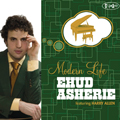
Another review for Ehud Asherie “Modern Life” featuring Harry Allen….

www.allaboutjazz.com

Modern Life
Ehud Asherie featuring Harry Allen | Posi-Tone Records (2010)

By Raul d’Gama Rose

It is rare indeed to discover a young pianist, so obviously neither a baby nor a Baby Boomer, who is steeped in the history and tradition of American music from the turn of the twentieth century onwards. To find he can write a mean blues is a wonder and more than a joy to hear. To then get him in the studio in the company of someone like tenor saxophonist Harry Allen must be any producer’s dream, but Marc Free made it happen. Ehud Asherie and Harry Allen are swinging madly on Modern Life. The two musicians seem soul brothers and though several years may separate them, they appear to be attuned to each other’s consciousness as if they were twins.

Asherie is a pianist who has obviously listened to Tommy Flanagan and perhaps even Jimmy Rowles. As a composer, Asherie is influenced by the compositional style and early music of Hank Jones. Asherie flavors the melodious twists and turns of the charts he writes, but he’s his own man as a soloist, with a right hand that rolls delightfully over the black and white. His expression is genteel, and his dynamic is so tuned to the rhythm of what he is playing, he would be wonderful to dance to. His pianistic vocabulary when he solos is sophisticated. He tantalizes with darting phrases and lines that suddenly stop, then fly off again. And when the line returns it is often inside out, a steady flow of surprises unfolding in its wake. To that extent, both his blues are wonderfully crafted with uncommon erudition. The two blues—”Blues for George” and “One for V”—feature some exemplary writing. The elemental sadness of the melody hangs as the chart is paced just about half a beat slower, enough for a noisier tug at the strings of the heart.

The rest of the fare seems to have fallen into the musicians’ studio full of stardust. It might have been calculated to provide a feature for Harry Allen. And this tenor saxophonist steps way up to the spotlight to play his part. His tone is low and majestic, sliding with almost divine glissandos from line to line. His broad sliding lines curve through the air and embellish every melody he plays, especially on “I’ve Told Every Star,” crafted by Jerome Kern. “No Moon at All,” the David Mann/Redd Evans classic, penned in 1917, which says much about how far the musicians were prepared to go to preserve the emotion of the set is also wonderfully rendered recalling—almost—the fey character of Julie London’s 1927 classic performance. On Billy Strayhorn’s “A Flower Is A Lovesome Thing,” Allen and Asherie virtually caress the melody in a spectacular, sensuous manner that keeps the air charged with emotion.

It would be sheer fallacy not to also acknowledge bassist Joel Forbes and drummer Chuck Riggs, who have a symbiotic feel for the program. It is hard to imagine a better rhythm section that plays with such sensitivity for the material, or for the album’s stars to shine ever brightly.

Track listing: I’ve Told Every Little Star; Blues for George; The Trolley Song; He Loves And She Loves; Vignette; One for V; No Moon At All; Casbah; Soon; A Flower Is A Lovesome Thing.

Personnel: Ehud Asherie: piano; Harry Allen: tenor saxophone; Joel Forbes: bass; Chuck Riggs: drums.

Posted on Leave a comment

Ralph Bowen, Dan Pratt, Brandon Wright: Posi-Tone strikes gold again

By J Hunter

Traditional jazz does not have to be boring. It does not have to be staid, or re-fried or adhere to a formula concocted in a New Orleans barroom over nine decades ago. A lot of the large labels don’t get that. Fortunately, the creative triumvirate at Posi-Tone Records not only understands this concept, but they practice it in a big way. The label closed out 2009 with solid efforts by saxman Wayne Escoffery with Uptown and drummer David Ashkenazy with Out With It, and they’ve hit the ground running in 2010 with three more great releases.
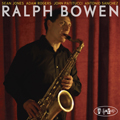
bowen album coverRalph Bowen
Due Reverence
Posi-Tone Records
2010

Tribute discs have long been thick on the ground in jazz. Compatriots remember a colleague who has gone, and new generations give respect to the legends that showed them the way. But not all inspiration comes from giants; sometimes it’s a teacher, or even a fellow countryman who plays the same instrument but hasn’t got a wing in the hall of fame. The latter categories are the building blocks tenor man Ralph Bowen uses to construct Due Reverence.

The opener, “Less Is More,” begins with guitarist Adam Rogers in the clear, playing beautifully meditative lines that reflect the disc’s title. Bowen and bassist John Patitucci ease themselves into the picture, with Patitucci bowing underneath Bowen’s rich melody line. “Less” crystallizes into a bossa when drummer Antonio Sanchez completes the scene, but the bossa goes modern as Bowen slowly turns up the temperature. He doesn’t blow wild, but his passion for his subject is undeniable, as is the intention in his tenor. Rogers and the rhythm section inject some late-night groove into the final section, proving once again that Rogers can do a lot more than just blow people’s eardrums out with his electric wizardry.

There are only five tracks on Reverence, but when the subject is the people who helped form a career, five can be all that’s needed. Bowen’s finger-snapping blues, “Phil-Osophy,” is named for clarinetist Phil Nimmons, a 1930s bandleader and fellow Canadian, while the tasty “Mr. Scott” and the coda, “Points Encountered,” are respectively dedicated to two of Bowen’s instructors at Rutgers. “Less” was written for guitarist Ted Dunbar, one of the first jazz professors at that institution, and the high-flying “This One’s For Bob” goes out to one of Bowen’s many employers, tenor wizard Bob Mintzer. But once again, the fame of a subject is not what matters here.

What does matter (and what most definitely impresses) is Bowen’s love for each of his subjects. All five tracks are long-form pieces that exude purpose and commitment as each character is “fleshed out” by Bowen and his partners. Trumpeter Sean Jones joins the front line on “Scott,” goosing up the energy with his pure, clean tone as he offers Bowen a shining harmonic foil. The track shows the album might have been even livelier as a quintet date. But then, Due Reverence might not have been as personal—or as eloquent—as it is.

Dan Pratt Organ Quartet
Toe The Line
Posi-Tone Records
2010

Reedman Dan Pratt may be a product of northern California’s wine country, but there’s nothing mellow about the music he’s making. Along with membership in about five New York City big bands, this alumnus of the Monterey Jazz Festival’s High School All-Star Band is also part of the mushrooming music scene on the Brooklyn side of the East River. There’s a real swagger to the jazz coming out of Brooklyn nowadays, and that swagger is one of the reasons why Toe The Line works like a charm.

The off-time boogie, “Houdini,” gives this album a beginning as unique as Pratt’s front-line sound. Trombonist Alan Ferber counters Pratt’s opening melody while Jared Gold’s organ lays the foundation even as it helps lift Pratt’s first solo to the next level. Gold’s fills are as solid as his last name, and Pratt’s lines are juicy, unvarnished and laced with a smoky R&B flavor that’s nothing but fun. Ferber’s following solo keeps the direction but changes the harmonic, making it deeper and rounder. When he and Pratt join up on the head, they launch dueling musical monologues that infuse the closing with a wonderful complexity.

Gold’s own Supersonic (Posi-Tone, 2009) showed potential, but suffered from a shortage of engaging material. Without the burden of leadership, Gold gets down and plays his tail off on Toe The Line. He slashes as he runs on the breakneck “Minor Procedure,” throws John Medeski-like color splashes onto “Wanderlust,” and changes the direction of Pratt’s take on Duke Ellington’s “Star-Crossed Lovers” by supplanting the initial romantic mood with a hopping urban vibe. Ferber’s exploration on “Doppelgänger” is both aggressive and off-kilter, adding to the skewed atmosphere of Pratt’s composition. Conversely, Ferber’s solo on the funked-out “Uncle Underpants” eschews introspection in favor of putting the pedal to the metal.

Put simply, Pratt and Ferber love to “fight,” and take multiple opportunities to throw musical punches at each other in a riveting variation of the Afro-Brazilian dance discipline capoeira. After all the battles and the boogie, the whole quartet comes together for the gospel-flavored blues coda, “After.” It’s a warm tribute to the late Bob Pratt, but while the music is certainly reverent, the passion that fuels the piece (and Pratt’s solo in particular) still shows the swagger that makes Toe The Line great on so many levels.
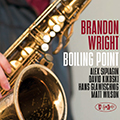
Brandon Wright
Boiling Point
Posi-Tone Records
2010

Putting veteran musicians behind the subject of a maiden recording can actually attract negative questions. Can the rookie match the quality these heavy players are known for producing? More importantly, were the heavies brought in to mask the rookie’s deficiencies? Fortunately the answers are “Yes” and “No”—in that order—when it comes to Boiling Point, tenor man Brandon Wright’s recording debut.

The collective résumé of Wright’s backup band—(pianist David Kikoski, drummer Matt Wilson, bassist Hans Glawischnig and trumpeter Alex Sipiagin)—would fill several pages, but if Wright was intimidated, there’s no sign of it on the scorching opener, “Free Man.” After a quick call-and-answer with Sipiagin, Wright takes off like a bird for the high end of the tenor’s register. His lines are hot even as they maintain a linear direction, and his lyrical sense is spot-on as Kikoski’s comps and fills offer fine counterpoint. When it’s the pianist’s turn, there’s no transition point from support to soloist—Kikoski simply kicks the comp into a completely different gear and steps to the front like he owns it…which he does for the balance of his solo.

Wright’s chemistry with Kikoski is explosive, with a vibe that’s more colleague-to-colleague than teacher-to-student. Their duet on the first section of Jimmy van Heusen’s “Here’s That Rainy Day” is sensational, and is a logical extension of Kikoski’s pensive in-the-clear opening. Kikoski’s solos on the bossa-bopper, “Castaway,” and “Odd Man Out,” a track reminiscent of trumpeter Miles Davis, are both inspired and inspiring, and Kikoski lays the groundwork for almost every tune on Boiling Point, setting up vamps and foundation figures that are perfect outlet passes for Wright’s melodies. He even helps Wright morph Stone Temple Pilots’ “Interstate Love Song” into a waltz evoking pianist Bill Evans, and that’s a tall, tall order.

Wilson and Glawischnig stay primarily in the background, but that doesn’t mean they’re wallflowers. Wilson is one of the most mesmerizing drummers in jazz, and it’s worth wearing headphones to fully experience his dynamic fills. Glawischnig’s resonant lines snake around Wright on the forlorn “Drift,” and Glawischnig and Kikoski play dueling counters on “Rainy Day.” While Sipiagin provides a pure, bright tone and solid harmony on the melodies, his solos frequently fall short next to Kikoski’s bursting fills. On the other hand, Wright more than holds his own with the veterans, making Boiling Point a satisfying debut and setting a fine baseline for all of Wright’s future recordings.

Tracks and Personnel

Due Reverence

Tracks: Less Is More; This One’s For Bob; Phil-Osophy; Mr. Scott; Points Encountered.

Personnel: Ralph Bowen: tenor sax; Adam Rogers: guitar; John Patitucci: bass; Antonio Sanchez: drums; Sean Jones: trumpet (4).

Toe The Line

Tracks: Houdini; Minor Procedure; Wanderlust; Doppelgänger; Star-Crossed Lovers; Toe The Line; Stoic; Uncle Underpants; After.

Personnel: Dan Pratt: tenor sax; Alan Ferber; trombone; Jared Gold: organ; Mark Ferber: drums.

Boiling Point

Tracks: Free Man; Drift; Odd Man out; Boiling Point; Here’s That Rainy Day; Castaway; Interstate Love Song; You’re My Everything.

Personnel: Brandon Wright: tenor sax; Alex Sipiagin: trumpet; David Kikoski: piano; Hans Glawischnig: bass; Matt Wilson: drums.
Posted on Leave a comment

CD Review: Brandon Wright – Boiling Point

lucidculture.wordpress.com

Good title. Tenor sax player Brandon Wright’s new album is fearless, aggressive and fun, ablaze with a catchy tunefulness that sets up a lot of memorable solo work of his own along with trumpeter Alex Sipiagin, pianist David Kikoski, bassist Hans Glawischnig and drummer Matt Wilson propelling things with a joyous groove. Yet for all the firepower, the band is equally adept at ballads, with a couple of real surprises here. A Maria Schneider, Mingus Big Band and Chico O’Farrill alum and current Chuck Mangione sideman, Wright is a hookmeister: his big band experience has served him well.

Wright sets the tone right off the bat with Free Man, joyously shifting from one mode to another. Sipiagin follows him more bluesily, then Kikoski intensely with some clever quotes in a shifting series of runs down the scale. The second cut, Drift is a casually lyrical 6/8 number, Kikoski weaving incisively beneath Wright’s gently buoyant flights, Sipiagin taking a more pensive tone. Track three, Odd Man Out has an understated swing that picks up once Wright starts sailing after the first verse, Kikoski choosing his spots with spot-on precision. Again Sipiagin gets to play bad cop to Wright’s good cop, bringing in the clouds. The title track matches subtle chordal shifts to an upbeat vibe all the way through to a blazing conclusion, Wright just about jumping out of his shoes, he’s having such a good time. Kikoski’s solo is a clinic in how to work a simple vamp, subtly yet ebulliently ornamenting it. And the swaying, latin-tinged Castaway is a showcase for robust Sipiagin flights and cartwheels, Wright taking it down a bit before Kikoski’s sparkling solo leads it to an ambitiously staggered horn raveup at the end.

There are also three covers here. Jimmy Van Heusen’s Here’s That Rainy Day is just sax and piano, a comfortably medicated dialogue. Interstate Love Song rearranges the country-flavored Stone Temple Pilots original to the point of being unrecognizable (good thing, actually, especially when the piano solos). They close with a warmly convivial, bluesy take of Nat King Cole’s You’re My Everything. The album is just out on Posi-Tone.

Posted on Leave a comment

AAJ writer C. Michael Bailey provides some additional insight with his review of Brandon Wright’s “Boiling Point” CD….

www.allaboutjazz.com

By C. Michael Bailey

The first thing conspicuous about Brandon Wright’s recording Boiling Point is his rhythm section, composed of pianist David Kikoski, bassist Hans Glawischnig and drummer Matt Wilson. A second curiosity is exactly who this precocious young saxophonist is to have such a rhythm section. Wright, the 2009 ASCAP Foundation Young Jazz Composer award recipient originally from Woodcliff Lake, New Jersey, was educated at the Universities of Michigan and Miami, and of late, a member of the Maria Schneider Jazz Orchestra, The Mingus Big Band and the Vanguard Jazz Orchestra. He has been leading his own quartet for several years and has finally gotten around to recording as a leader, fronting a quintet of the aforementioned rhythm section augmented by trumpeter Alex Sipiagin.

Wright composed seven of the eight pieces included on Boiling Point, the lone standard being a reflective “Here’s That Rainy Day,” on which Wright summons the tones of Stan Getz and Ben Webster infused with the muscularity of Dexter Gordon. But first things first, the opening “Free Man” is a thoroughly modern blues that has Wright breaking out in solo like John Coltrane on “‘Round Midnight” except sounding like Sonny Rollins. Wright’s attack is sure and true with no hesitancy in his playing. Both his writing and playing indicate he knows exactly what he wants to do. An empathic, almost telepathic relationship with his crack rhythm section also helps. Sipiagin provides a firebrand brass foil to Wright’s assertive approach, being no less assertive and perhaps even more musically loquacious.

Kikoski performs at his angular best on the opener and the disc’s title piece. He is the whimsical one of the bunch, charging Wright’s straight ahead momentum with left, right and U-turns, all anticipated supernaturally by uber-bassist Glawischnig. Glawischnig and drummer Wilson tighten Wright and Sipiagin’s swing on “Castaway” keeping the two jazz pedantics from spinning off into some post bop orbit around the planet Tony Williams. Wright already possesses an impressive resume that should only improve. At his current 27 years, he’ll be expected to have a long and creative career and it will be much fun to watch this young talent mature into a true master.

Track listing: Free Man; Drift; Odd Man Out; Boiling Point; Hear’s That Rainy Day; Castaway; Interstate Love Song; You’re My Everything.

Personnel: Brandon Wright: tenor saxophone; Alex Sipiagin: trumpet; David Kikoski: piano; Hans Glawischnig: bass; Matt Wilson: drums.

Posted on

Bruce Lindsay’s AAJ review for Brandon Wright “Boiling Point”….

By BRUCE LINDSAY


Track Listing: Free Man; Drift; Odd Man Out; Boiling Point; Here’s That Rainy Day; Castaway; Interstate Love Song; You’re My Everything.

Personnel: Brandon Wright: tenor saxophone; Alex Sipiagin: trumpet; David Kikoski: Piano; Hans Glawischnig: bass; Matt Wilson: drums.

Style:Straightahead/Mainstream

Read more reviews of
Boiling Point

New York based tenor saxophonist and composer Brandon Wright debuts confidently as a leader on Boiling Point—a strong and enjoyable straight-ahead album that seems set to establish his reputation on the jazz scene. Wright surrounds himself with some fine musicians and makes a judicious and unusual selection of standards to accompany his own tunes, ensuring a consistently high quality recording.

The opening riff of “Free Man,” played by Wright and trumpeter Alex Sipiagin, starts things off with a real bang—it’s hard hitting, emphatic and swinging. “Boiling Point” is in a similar hard bop vein—this time Wright’s tenor takes the lead line on its own while the rhythm section drives the tune forward. “Drift” is, by contrast, a smooth and gorgeous tune on which all of the musicians demonstrate real mastery of their instruments—controlled yet emotive performances across the board here, especially from bassist Hans Glawischnig and drummer Matt Wilson.

Wright’s arrangements of two jazz standards are excellent. Jimmy Van Heusen’s “Here’s That Rainy Day” and Harry Warren’s “You’re My Everything” are beautifully played, with Wright’s warm and confident tenor playing to the fore—David Kikoski‘s piano solos are also extremely impressive, showing a delicate and sympathetic touch.

Wright is not simply locked into the jazz tradition—he also has an ear for the music of other genres as he ably demonstrates with a version of “Interstate Love Song,” written by Robert DeLeo of hard rock band Stone Temple Pilots. Wright takes the tune—originally on the band’s 1994 albumPurple (Atlantic) and voted 58th in VH-1’s 100 Top Hard Rock Songs—and performs it on his own terms, investing the tune with a real straight-ahead jazz feel rather than attempting to “rock out.” The result is a success—a fluid, melodic, arrangement that retains some of the song’s hard edge but is recognizably a jazz performance.

Boiling Point is an intriguing album, with some exceptional playing from all of the musicians. Wright clearly demonstrates his writing and playing talents while his version of “Interstate Love Song” shows that he is willing to step out of the jazz mainstream in search of interesting and adaptable tunes—it’s an exploration that more jazz musicians should be willing to undertake and sets Wright up as a talented innovator of great promise.