Posted on

Sarah Manning – Dandelion Clock (Positone)

masterofasmallhouse.blogspot.com

Sarah Manning – Dandelion Clock (Positone)

A few seconds with Sarah Manning’s cutting and passionate alto and it comes as no surprise that one of her key early mentors was none other than Jackie McLean. Manning also studied with Yusef Lateef on one leg of a cross-coastal odyssey that eventually ended in New York City. This quartet set, her debut for Positone, displays the logical benefits of those peregrinations. Manning officiates a program comprised of originals save for Jimmy Rowles’ “The Peacocks” and Michel Legrand’s “The Windmills of Your Mind.” Her fluent parlance is vibrant post-bop and her wailing, sailing and soaring horn has plenty to say over the course of the program’s nine variable but consistently swinging pieces.

Pianist Art Hirahara fronts a rhythm section well suited to Manning’s specifications. Bassist Linda Oh and drummer Kyle Struve are likewise in tune and all three players join the leader in leaving little room for lulls or rests. The aforementioned Rowles tune starts the set in fine fashion with Manning wringing the melody dry of its lyrical moisture. Manning’s “Marble” mixes dissonance and thematic integrity in a manner that harkens back to McLean’s classic Blue Note sides. “Habersham Street” trucks in delicate ballad freight with Struve switching to brushes and Hirahara comping gilded patterns in time with Oh’s careful fills. Manning accords her colleagues equal opportunity and they make the most of it with a tempo count that resists rigidity and predictability, but her cadenza of gorgeous unaccompanied choruses makes it clear who holds the tiller.

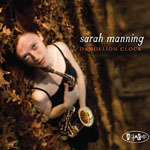
The rest of the set sustains a similarly high quality caliber. “I Tell Time By the Dandelion Clock” weaves a plangent vibrato lead with a dusky processional that flirts with free-time. The shifting signatures at the tune’s core necessitate a bit of balancing act, but one in which the players never mire. Struve and Hirahara are particularly adept in this regard, their muscular synchronicity giving Oh a serious run for the figurative money, a favor she returns with the sprinting bass lines that undergird the harmonic obstacle course that is “Crossing, Waiting”. At less than half the span, “Through the Keyhole” is no less ambitious thanks to a turn toward spirited collective improvisation. The idyllic cover shot of Manning reclining in a bed of fallen leaves may imply a sedentary session, but a subjective correlation doesn’t come close to passing muster once the music hits.


Posted on Leave a comment

John Barron’s AllAboutJazz review of Steve Davis’ Images

Allaboutjazz.com

Images – The Hartford Suite
Steve Davis | Posi-Tone Records (2010)

By John Barron

Images—The Hartford Suite pays homage to the culture and history of Hartford, Connecticut, courtesy of trombonist/composer Steve Davis, a long time resident of the city and faculty member at the University of Hartford. The ten-part suite is a sizzling set of straight-ahead jazz; stimulating, melodic and swinging. Davis, who co-leads the acclaimed ensemble One For All, and has performed as a sideman with the likes of Jackie McLean and Art Blakey, has assembled an impressive quintet for the session, with trumpeter Josh Evans adding to the mix on a handful of tracks.

Davis’ writing, firmly established in the hard-bop tradition, emphasizes singable themes with tight two and three part harmonies. Each tune offers plenty of wide-open space for solos. An adept improviser with quick-fire agility and relaxed phrasing, Davis sets the pace with winding and witty turns on up-tempo burners (“Nato,” “Tune for Calhoun”), medium swingers (“Twain’s World,” “J Mac’s Way”) and Latin-inspired grooves (“Park Street,” “Kenney’s”).

Alto saxophonist Mike DiRubbo and pianist David Bryant share the spotlight throughout, with vibrant, effervescent lines, spurring each other on with intensity and camaraderie. DiRubbo does a more than adequate job channeling the spirit of the late alto sax giant McLean on “J Mac’s World.” Evans brings added warmth to the session, albeit sporadically, especially with flugelhorn in hand on the hauntingly buoyant “Mode for Miantonomoh.” Bassist Dezron Douglas and drummer Eric McPherson are solid yet extremely pliable, pushing the top-end of the beat and adding creative intuitiveness.

Who knew Hartford was so hip? Left to the eyes and ears of Davis, the city comes off as one of the swinging-est places on the map. Images—The Hartford Suite is no-nonsense, small group jazz at its finest.

Track listing: Nato; The Modernist; Twain’s World; J Mac’s Way; Mode for Miantonomoh; Rose Garden; Tune for Calhoun; Park Street; Kenney’s; Club 880.

Personnel: Steve Davis: trombone; Mike DiRubbo: alto saxophone; David Bryant: piano; Dezron Douglas: bass; Eric McPherson: drums; Josh Evans: trumpet, flugelhorn; Kris Jensen: tenor saxophone (10).

Style: Straightahead/Mainstream

Posted on

31 Days Of Album Reviews #23: Dan Pratt Organ Quartet, “Toe The Line”

burningambulance.wordpress.com

DAN PRATT ORGAN QUARTET

Toe the Line (Posi-Tone)

Tenor saxophonist Dan Pratt has been leading this group for close to a decade; its debut CD,Springloaded, was released in 2003. Toe the Line is the quartet’s first CD on Posi-Tone, a retro-ish label I’ve started to really admire. They focus their attention on groups that mix modernity and classicism, that swing hard and have a feel for the blues but demonstrate a willingness—and sometimes an eagerness—to stretch the boundaries of post-bop. The result is a catalog full of unassuming gems like this one.

In addition to Pratt, this quartet features Alan Ferber on trombone, Jared Gold on organ and Mark Ferber on drums. The absence of a bass player gives the music a jumpy, not-quite-anchored feel that’s emphasized by Ferber’s drums, which are mixed with lots of room sound and a sharply ringing snare. Pratt and Ferber are a tightly bonded team, charging through melodic heads and offering each other intuitive harmonic support. The unison lines of “Doppelgänger,” with Ferber meeting Pratt’s saxophone at the bottom of the trombone’s range, are hypnotic and gripping. Gold’s organ is occasionally more hockey-rink than roadhouse, but at least he’s not a psychedelic explorer like Larry Young; he chugs along beneath the horns, letting them do most of the work and only occasionally erupting. His florid, half-gospel/half-soap opera performance on the ballad “The Star-Crossed Lovers” can’t be overlooked, though, and he totally dominates the title track. And on the closing “After,” which begins with an unaccompanied solo from Pratt, everyone sinks knee-deep into passionate, churchy blowing.

This is a really solid, hard-grooving album featuring excellent performances by four guys who’ve had a long while to get to know each other and figure out not only each player’s individual strengths, but how to combine those in surprising and impressive ways. Toe the Line does anything but. Highly recommended.

1. Do I foresee myself listening to this record again? Oh, yeah.

2. Should you buy this record? Absolutely.


Posted on

jazzreview.com write-up for “Due Reverence”…

www.jazzreview.com

CD Title: Due Reverence

Year: 2010

Record Label: Posi-Tone

Style: Straight-Ahead / Classic

Musicians:Ralph Bowen (tenor saxophone), Sean Jones (trumpet), Adam Rogers (guitar), John Patitucci (bass), Antonio Sanchez (drums)
Review:On the wings of his 2009 Posi-Tone release Dedicated, tenor sax ace Ralph Bowen reenlists the same all-star lineup for Due Reverence. Simply stated, the saxophonist packs a mighty punch while underscoring his virtuosity with fluency and an authoritative tone.  And he gets to the point, whether dishing out hyper-mode bop phrasings or easing the listener into a peppery ballad with soul-stirring intonations on the opener, “Less Is More.” From this point onward, the ensemble minces fire and brimstone with sparkling medium-tempo modern mainstream jazz pieces.

Bowen soars into points unknown via his impossibly fluent and complex choruses during the melodious and oscillating composition titled This One’s For Bob (for Bob Mintzer).”  Here, the all-world rhythm section sparks an oscillating pulse for Bowen and guitarist Adam Rogers’ blistering solo spots.  In other areas, the saxophonist steers the band through breezy and buoyantly flowing vistas.

On the Latin/jazz-waltz inspired “Mr. Scott (for James Scott),” Bowen and trumpeter Sean Jones trade vibrant fours while defining the primary melody with popping unison notes.  The final work “Points Encountered (for Robert Dick),” is a warmly paced, medium groove swing vamp, spiced by Rogers’ animated and briskly executed solo.

The album clocks in at forty-minutes or so, and Bowen doesn’t feel obligated to max out a CD’s approx. 80-minutes worth of data capacity with sub-par material.  Each composition stands on its own and sustains recurring interest.  Quality supremely triumphs over quantity throughout this high-caliber exposition, spawned by Bowen’s all-encompassing artistry and his venerable band-mates’ striking support.

Record Label Website: https://www.posi-tone.com

Artist’s Website: http://www.ralphbowen.com

Reviewed by: Glenn Astarita


Posted on

John Patten’s AAJ review for “Due Reverence”…

www.allaboutjazz.com

Saxophonist Ralph Bowen’s Due Reverence is a too-short set of tributes to horn players who’ve made an impression on Bowen. The five tunes were written in the styles of players Ted DunbarBob MintzerJames ScottPhil Nimmons and Robert Dick.

Bowen gets backing from a strong quartet—Sean Jones on trumpet, Adam Rogers on guitar, John Patitucci on bass and Antonio Sanchez on drums. The combination of competently-crafted tunes from Bowen (director of jazz ensembles at Rutgers), played by this outstanding group, will hopefully helpDue Reverence draw more attention to the saxophonist’s work.

The release opens with the captivating tribute to Dunbar, “Less is More,” with Rogers plucking sweetly on nylon-stringed guitar. After stating the theme, he’s joined by Bowen and Patitucci (using a bow), taking a dark turn before a switch to mid-tempo swing. Here and throughout Due Reverence, Bowen shows his bop leanings, with fluid scales and a steady eighth-note rhythm.

While Bowen’s playing is solid, it’s Rogers who really shines. He gets to mix up tones, switching from full-bodied jazz timbres to tender, nylon-string,Gene Bertoncini-like lines. He’s able to comp with full chords to drive tunes, as well as octaves and quick three-note chord stabs. Each of his solos is carefully developed and constructed, as on “This One’s for Bob”—a bop guitar feast that starts with short statements quickly developed into extended runs and contrapuntal string-jumping.

Bowen’s compositions cleverly nail the key aspects of each artist he’s acknowledging, including Mintzer’s jagged lines and Nimmons’ smooth swing and use of dynamics. It’s a fine balance to pay homage without losing personal style, and Bowen walks the line just right. The stylistic tributes are recognizable but never overtake Bowen’s own style in the solos.

Due Reverence is a fine credit to each of the artists involved, as well as those to whom the reverence is due.


Posted on Leave a comment

A rave review of Dandelion Clock from lucidculture

http://lucidculture.wordpress.com

CD Review: Sarah Manning – Dandelion Clock
May 13, 2010 · Leave a Comment

Count this as the best jazz album of this young decade so far – give it another ten years and it could be be one of the best jazz albums of an old decade. Not only is Sarah Manning a fearless and intense player, she’s a fearless and intense composer, shades of another first-class alto saxophonist, Kenny Garrett. Restless, irrepressible, unafraid and unfailingly terse, much of what she does here is transcendent. Like Garrett, she likes a stinging chromatic edge, often taking on a potently modal, Middle Eastern tinge. Like JD Allen, she doesn’t waste notes: she doesn’t waste time making her point and the result reverberates, sometimes because she likes to hit the hook again and again, sometimes because her punches delivers so much wallop. There are plenty of other influences on her new cd Dandelion Clock (Coltrane, obviously), but her voice is uniquely hers. An obviously inspired supporting cast of Art Hirahara on piano, Linda Oh on bass and Kyle Struve on drums do more than just support, they seize the moment as you do when you get the chance to play songs like this. The tracks are originals bookended by a couple of covers (isn’t that what cover are for, anyway?).

The most Coltrane-esque composition, both melodically and architecturally, here is the dark, bracing ballad Marble, Manning’s circular hook giving way to Hirahara’s thoughtfully slinking piano that builds to an insistent staccato crescendo. Oh’s solo follows with similarly relentless insistence as piano and drums prowl around behind her. The title track contemplates the concept of time as children see it – it’s not finite. The song is pensive and uneasy, as if to say that Manning knows something the kids don’t and this is her rather oblique way of telling them. Bernard Herrmann-esque piano builds expansively to a tense rhythm that ticks like a bomb, Manning emerging off-center, circling her way down to a simple but brutally effective crescendo and an ominous diminuendo from there. Crossing, Waiting is an even more potently intense exercise in how to build tension, beginning with Oh’s marvelously laconic, pointed solo, Manning eventually adding raw little phraselets over Struve’s equally incisive rattle. The high point of the album is The Owls Are on the March, something of an epic. Hirahara’s haunted-attic righthand is the icing on Manning’s plaintively circling phrases. The way she builds and finally sails her way out of an expansive Hirahara solo, turns on a dime and finally brings up the lights, then winds them down mournfully again is one of the most exquisite moments on any jazz album in the last few years.

There’s also the aptly titled Phoenix Song, Manning’s easygoing congeniality a bright contrast with the brooding band arrangement until she goes otherworldly with them at the end; the equally otherworldly tone poem Through the Keyhole and the after-dark scenario Habersham St. The two covers are strikingly original, a defiantly unsettling post-bop interpretation of Jimmy Rowles’ The Peacocks, and Michel Legrand’s The Windmills of Your Mind, taken with a murky tango feel to the back streets of Paris – prime Piaf territory – and then out to Toulouse. Manning is somebody to get to know now – the album’s just out on Posi-Tone.

Posted on Leave a comment

Woodrow Wilkins from AAJ.com on Boiling Point

allaboutjazz.com

by Woodrow Wilkins

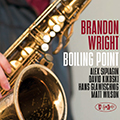
It’s never a bad thing when an artist emerges with a collection of more original music than remakes of standards. And when the covers are unique arrangements, or of songs not copied ad nauseam, so much the better, as is the case with saxophonist Brandon Wright’s Boiling Point.

Wright, originally from Woodcliff Lake, New Jersey, leads his own quartet in the New York City area. He has played with the Village Vanguard Jazz Orchestra, Chico O’Farrill Latin Big Band, Doc Severinson and Tony Bennett, among others. For his debut release as a leader, Wright is accompanied by trumpeter Alex Sipiagin, pianist Dave Kikoski on piano, bassist Hans Glawischnig and drummer Matt Wilson.

The rhythm section lays down the groove, setting off “Free Man.” Sax and trumpet blend on the melody, doing a brief call-and-response in the bridge. After a second pass, Wright steps out with a spirited solo, followed by Sipiagin and Kikoski. These musicians are clearly having fun with this piece.

“Odd Man Out” begins with Kikoski alone. Wilson and Glawischnig then join in, setting up the leisurely tempo, with Wright and Sipiagin harmonizing on the lead. Wright amps up the power during his solo, while Sipiagin gives the illusion of softening up, but his release is measured—spacing phrases at first and connecting them later. Throughout, Wilson and Glawischnig carry the beat, noting a few points of emphasis.

Sipiagin sits out on the energetic title track, with Wright leading and Wilson throwing in some rim shots and cymbal crashes to help underscore the melody. After the introduction, the tenor takes off on a hard-charging adventure, with Kikoski answering.

Wright composed five of the eight tracks on Boiling Point.

Track listing: Free Man; Drift; Odd Man Out; Boiling Point; Here’s that Rainy Day; Castaway; Interstate Love Song; You’re My Everything.

Personnel: Brandon Wright: tenor saxophone; Alex Sipiagin: trumpet; David Kikoski: piano; Hans Glawischnig: bass; Matt Wilson: drums.

Posted on Leave a comment

Bruce Lindsay’s review of Sarah Manning “Dandelion Clock”……

www.allaboutjazz.com

by Bruce Lindsay

Dandelion Clock
Sarah Manning | Posi-Tone Records (2010)

By Bruce Lindsay

The cover of Dandelion Clock, Sarah Manning’s third album as leader, shows the saxophonist in soft focus, lying on a bed of fallen autumn leaves and lightly cradling her alto. It’s standard smooth jazz cover art—but appearances can be deceptive, for Manning is one of the hardest-blowing and intense of musicians while her talents as a composer result in some fine original tunes.

Manning’s distinctively hard-edged, even aggressive, tone dominates this album from the opening bars of Jimmy Rowles’ “The Peacocks.” Pianist Art Hirahara’s short and lyrical introduction soon gives way to Manning’s alto and although she gives her fellow players plenty of opportunity to display their own talents this forceful first statement makes it clear who’s in charge.

Seven of Manning’s own compositions follow “The Peacocks.” The first of these, “Marble,” is a light and swinging tune with Manning displaying a slightly softer approach while Linda Oh’s bass and Kyle Struve’s drums carry the tune’s rhythmic drive. “Through the Keyhole” is freer and more meditative, as is “The Owls (Are on the March)” with its shifting rhythms and patterns. The album closes with Michel Legrand’s “The Windmills of Your Mind”—the opening duet between Manning’s sax and Oh’s emphatic bass is fascinating, but once the band start to play the overly-familiar melody this initial impact is lost.

Scattered across the album are three memorable tunes with a real cinematic quality, evoking the moods and atmospheres of 40s and 50s film noir soundtracks. The gorgeously rich “Habersham Street” provides the perfect musical backdrop for images of a rain-soaked and reflective Sam Spade, “Phoenix Song” soundtracks the fast-moving nightlife of a city’s streets while “Crossing, Waiting”—with its insistent single-note bass intro from Oh—builds up a menacing tension. If anyone is about to film another James Ellroy novel, this is the band to call.

“Dandelion Clock” is an inventive and genuinely atmospheric album from a young leader with a distinctive take on the playing and writing of contemporary jazz music. The band is tight and talented and Manning’s playing and writing is confident, mature and exciting. Hopefully there is much more to come.

Track listing: The Peacocks; Marble; Habersham Street; I Tell Time by the Dandelion Clock; Crossing, Waiting; The Owls (Are on the March); Through the Keyhole; Phoenix Song; The Windmills of Your Mind.

Personnel: Sarah Manning: alto sax; Art Hirahara: piano; Linda Oh: bass; Kyle Struve: drums.

Posted on Leave a comment

AAJ writer Raul D’Gama Rose gives us a heartfelt run down of Brandon Wright “Boiling Point”….

www.allaboutjazz.com

by Raul D’Gama Rose

The appeal of saxophonist, Brandon Wright comes fast, bearing a rather lyrical swagger. This young tenor player shows plenty of confidence—even cockiness—and a mature attitude on Boiling Point. Wright has a full, round tone and a forthright attack; his fingering is deft, almost like a stage magician, and it bodes with it a whispering glissando in the dying elements of his phrases and notes. His solos are full of bright ideas and flow full and free, billowing in gentle gusts of breezy air expelled from pliant lungs. They grow vertically, spiraling upwards with elegant power, twirling around his peers, especially trumpeter Alex Sipiagin, who sometimes answers in a contrapuntal fashion. Then, of the down-stroke Wright employs, a double helix-like free-fall occurs, as he soft-lands on the beautiful melodies he creates/interprets.

Wright’s compositions are modal in nature, forcing the ensemble to sometimes echo the middle period of John Coltrane, where he was extremely garrulous in the company of Wynton Kelly and McCoy Tyner, and the arpeggios were incessant and full of dynamic tension. However, Wright is his own man as well and sounds less like ‘Trane than imagined. If ancestry is being sought, then he has descended from a melting pot that includes more Wayne Shorter than ‘Trane. Still his voice is distinctive. The breathtaking pace of “Free Man” is followed by the more thoughtful, almost languorous “Drift.” “Odd Man Out” is bewitching and tricky, both harmonically and rhythmically. “Castaway” returns to a mysterious melody, indicating that Wright somewhat favors the more magical elements of sound rather than the logical, mathematical notation of music, for here he bends notes and makes them twist and turn as he plays with tone and textures; this is such a thrill to the ear.

Of the standards fare offered, “Here’s That Rainy Day” is soaked in emotion, and is a ballad par excellence. The softness of this performance is distinctly vocal, and almost conjures up the spirit of someone like Sarah Vaughan as Wright’s heartrending melody unfolds. “Interstate Love Song” negotiates its elegiac content with mature expertise, as the song swings gently between waltz-time and a quickstep. “You Are My Everything” is another masterfully melodic sashay from a musician who combines the best sense of lyricism and romance of music, altogether eschewing crass sentimentality.

Part of the reason Wright blows with heartfelt abandon is that he is accompanied on his tuneful journey by a fine group of musicians—cohorts from regular working bands like the Mingus Big Band, Maria Schneider Orchestra and Fred Wesley’s. Hans Glawischnig is majestic and melodic, dancing all over the songs’ bass lines. Pianist David Kikoski is firm and sinewy, but expresses himself with feline grace. And Matt Wilson listens as carefully as a musician singing in harmony with a lead voice. Based on the musical evidence here, much more will be expected from Wright, and soon.

Track listing: Free Man; Drift; Boiling Point; Here’s That Rainy Day; Castaway; Interstate Love Song; You’re My Everything.

Personnel: Brandon Wright: tenor saxophone; Alex Sipiagin: trumpet; David Kikoski: piano; Hans Glawischnig: bass; Matt Wilson: drums.

Posted on Leave a comment

Another positive review for Brandon Wright “Boiling Point” this time from the pen of freelance jazz journalist Gina Vodegel….

www.allaboutjazz.com
by Gina Vodegel

Determining the order of tracks on an album can be as significant as gathering the right ensemble of musicians for a project. On both accounts, saxophonist Brandon Wright has succeeded very well on his debut, Boiling Point, for which he penned five of the eight compositions. The opening “Free Man” grabs hold at once, with the piano/bass/drums rhythm section paving the way, in just a few beats, for a strong melodic entrance by Wright and trumpeter Alex Sipiagin (Mingus Big Band/Dynasty/Orchestra, Dave Holland Big Band, Michael Brecker’s Quindectet).

As soon as Wright kicks off on his own, thoughts emerge of how the legacy of great jazz legends is being kept alive; a notion that finds more room for contemplation during the intro to “Drift.” It’s a sensitive piece where, again, both Wright and Sipiagin narrate a rich melodic line until the saxophonist takes lead in an engaging musical monologue. “Odd Man Out” starts with a luscious piano intro by David Kikoski; a great composition with a catchy recurring theme, around where Wright, Sipiagin and Kikoski play their hand in tasteful abundance. The aptly named, up-tempo title track—halfway through the album—touches on Wright’s many influences and encounters as a sideman, ranging from his Miami school days to touring with various ensembles including The Gregg Field Orchestra, the Chico O’Farrill Latin Big Band, the Maria Schneider Jazz Orchestra and Chuck Mangione.

The beautiful standard “Here’s That Rainy Day,” by Jimmy Van Heusen, is poised and very elegant, qualities that also define the rest of the album. “Castaway,” yet another up-tempo piece, is the longest on the album at over nine minutes, highlighting conversational as well as solo skills between Wright, Sipiagin and Kikoski, whilst bassist Hans Glawischnig and drummer Matt Wilson offer appropriate detail, accent and deceiving invisibility. “Interstate Love Song,” a hit from Stone Temple Pilots, contains a clever arrangement that highlights Wright’s ability to transform any kind of music. The album concludes with “You’re My Everything,” from Harry Warren (one of the first major American songwriters), with Kikoski taking much of the credit for this instrumental yet narrative-rich version, as well as pushing Wilson a little bit in the front.

Though not innovative and, in many ways, treading familiar ground, Wright and his excellent band do offer a fresh and solid incarnation of the jazz idiom: soulful, lyrical, narrative and sensitive, technically skilled and emotionally evolved. Boiling Point is an intelligent debut from a young musician whose broad, award-winning musical horizon is portrayed with a fine sense for both traditional and contemporary sounds.

Track listing: Free Man; Drift; Odd Man Out; Boiling Point; Here’s That Rainy Day; Castaway; Interstate Love Song; You’re My Everything.

Personnel: Brandon Wright: tenor sax; Alex Sipiagin: trumpet; David Kikoski: piano; Hans Glawischnig: bass; Matt Wilson: drums.