Posted on Leave a comment

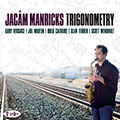
Dan Bilawsky’s review of Jacam Manricks’ Trigonometry

By Dan Bilawsky

This album, like the branch of math where it gets its names, deals with angles and relationships from different sides. Saxophonist/composer Jacám Manricks enjoys creating some rhythmic friction—using different combinations of instruments and musicians within his group—while also treating each piece like a fresh canvas, ready to be turned into high art. His pleasing and pure-toned sound is used to create a hybrid style that owes as much to classical saxophone writing and left-of-center jazz work as it does to straight ahead music.

The title track establishes Manricks as the leader—as his saxophone is front and center while elegantly gliding over the groove in seven—but up-and-coming drummer Obed Calvaire also gets to flex his musical muscles, creating a rumbling avalanche of a solo over the vamp near the close of the tune. Pianist Gary Versace throws some soulful licks into the introduction of “Cluster Funk,” and—along with Calvaire and bassist Joe Martin—establishes a churchy-meets-quirky funk groove in seven. Trumpeter Scott Wendholt is right with the rhythm section in terms of mood and direction but Manricks follows him and—with a snake charmer statement at the top of his solo—indicates that he’ll be going in another direction.

“Nucleus” begins with some interlocking phrases from various members of the ensemble and a luxuriant blend between the different instrumental voices in the group. Fresh harmonies and a unique writing style—rather than a strong melodic core—move this intriguing piece forward. While Manricks’ soloing is absorbing here, the music reaches its emotional peak when Calvaire burns at the end of the track and bursts of sound come shooting out of the horns. Eric Dolphy’s “Miss Ann” is the lone cover on this album of, otherwise, original material and Manricks uses the opportunity to work within the piano-less trio format. Calvaire’s superb swing drives the song and Manricks’ sprinting saxophone work and Martin’s rhythmically charged soloing are a treat.

The awkward rhythmic gait of “Sketch” is like an aural representation of a menacing giant lurking around. The lopsided nature of the main rhythmic riff is both unsettling and extremely hip at the same time. Hushed, mournful tones escape from Manricks’ saxophone, working over a gentle piano and bass presence, on “Mood Swing.” Hypnotic, undulating eighth notes from Versace provide a cushion for Manricks before the piano enters the foreground for a loose solo excursion. An off-kilter, arcing bass riff underscores “Combat” and provides the foundation for Manricks and Versace to do some exploring. “Micro Gravity” begins with a somber, classically-infused saxophone working over a sparse piano part. Calvaire’s drums-in-the-distance marching cadence enters and a repetitive bass riff keeps things in line for a while. Versace delivers a Philip Glass-like arpeggiated line for a bit and Manricks returns with some more saxophone soul searching. Superb saxophone work, intellectually stimulating writing and ingeniously dovetailed rhythmic lines are the three sides that form the musical shape on Trigonometry.

Track listing: Trigonometry; Cluster Funk; Slippery; Nucleus; Miss Ann; Sketch; Mood Swing; Labyrinth; Combat; Micro Gravity.

Personnel: Jacam Manricks: saxophones; Gary Versace: piano; Joe Martin: bass; Obed Calvaire: drums; Alan Ferber: trombone; Scott Wendholt: trumpet.

Posted on Leave a comment

Bruce Lindsay’s AAJ review of Steve Davis’ Images

By Bruce Lindsay

Trombonist/composer Steve Davis was commissioned by the Greater Hartford Festival of Jazz to compose Images: The Hartford Suite, with track dedicated to a contemporary or historical Hartford figure or place. Thankfully, a detailed knowledge of Hartford, Connecticut is not a prerequisite for the enjoyment of this music; the talent and enthusiasm of the musicians accentuate this set of upbeat, positive, swinging tunes.

This is the Davis quintet’s second album, following Outlook (Posi-Tone Records, 2008). Every member of the band swings with genuine power. Davis plays his trombone with a rich and rounded tone that melds perfectly with the softer tone of Mike DiRubbo’s alto. The addition of Josh Evans on trumpet and flugelhorn on tunes such as “Kenney’s” adds depth to the overall horn sound. The rhythm section drives everything along with just enough of a push to ensure that the band sounds energetic but never hurried. Eric McPherson’s cymbal work is exceptional throughout, his freedom to create intricate and subtle patterns assisted enormously by Dezron Douglas’ strong bass lines.

Davis credits Billy Strayhorn’s influence on “Rose Garden,” a slower and more reflective tune with Davis and pianist David Bryant contributing lovely, sparse solos. The tempo may be slow, but it’s by no means sad or pessimistic; elsewhere, however, tempos are quicker and the tunes are more overtly positive. Bop influences are also direct—not unexpectedly, given that Davis has worked with Art Blakey and acknowledges the great influence of Jackie McLean, to whom he dedicates “J Mac’s Way.” On “Tune For Calhoun” it’s the influence of bebop that has the upper hand; a fast, explosive, number that gives every member of the quintet a chance to deliver effective solos. Kris Jensen adds tenor sax to “Club 880,” which creates a real bite and fullness to the horn lines on this up-tempo tribute to the Hartford jazz venue.

Images: The Hartford Suite is a beautiful work, beautifully played. Inventive but also accessible, this is a celebratory album of uplifting tunes that should find this quintet receiving deserved wider recognition.

Track listing: Nato; The Modernist; Twain’s World; J Mac’s Way; Mode for Miantonomoh; Rose Garden; Tune for Calhoun; Park Street; Kenney’s; Club 880.

Personnel: Steve Davis: trombone; Mike DiRubbo: alto saxophone; Josh Evans: trumpet, flugelhorn; David Bryant: piano; Dezron Douglas: bass; Eric McPherson: drums; Kris Jensen: tenor saxophone (10).

Posted on Leave a comment

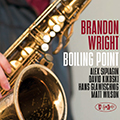
Elliot Simon’s AAJ Review of Boiling Point

By Elliott Simon

A talented young saxophonist, Brandon Wright came to NYC from Miami and honed his craft in its intimate uptown and downtown venues, while taking advantage of the Petri dish nature of its musician collegiality. And Wright obviously did more than just show up and play. He had to have listened, learned, practiced and sweated to master the full-throated sound that so impresses on each of Boiling Point’s eight cuts. As is obvious from both the compositional strength of the originals and the level of integrative ensemble work, Wright also learned that to be a great leader you need a rhythm section up to the task. In pianist David Kikoski, bassist Hans Glawischnig and drummer Matt Wilson, he has chosen very well.

The whole range of the tenor is here and Wright’s horn can be both smoky and smoke. The opening “Free Man” and title cut are bop vehicles that have broad rhythmic soundscape,s on which Wright swings and wails, showing who’s boss. Trumpeter Alex Sipiagin is also featured on several cuts and the two meld, fly off in different directions and then come back together in ways that can thrill the soul and touch the heart.

While Wright and Sipiagin can both certainly blow, the more introspective tunes like “Drift” reveal a gorgeous mature blending of warm sounds. Kikoski sets up a quirky mood and is perhaps “Odd Man Out” as the two front men blend beautifully while the pianist then waxes classically and beautifully to begin a gorgeously melodic Ben Webster-esque rendition of “Here’s That Rainy Day.” An interesting inclusion is Stone Temple Pilots’ “Interstate Love Song,” that has its countrified grunge morphed into urban sophistication.

It is easy to point out what’s wrong with NYC jazz but Brandon Wright’s debut as a leader points out everything about it that is so right.

Track listing: Free Man; Drift; Odd Man Out; Boiling Point; Here’s That Rainy Day; Castaway; Interstate Love Song; You’re My Everything.

Personnel: Brandon Wright: tenor sax; Alex Sipiagin: trumpet; David Kikoski: piano; Hans Glawischnig: bass; Matt Wilson: drums.

Style: Straightahead/Mainstream

Posted on Leave a comment

Dan Bilawsky’s AAJ Review of Images

By Dan Bilawsky

Images is trombonist Steve Davis’ love letter to his hometown of West Hartford, CT. The ten pieces he wrote for the album, and which make up his “Hartford Suite,” are all dedicated to people or places associated with this geographic region. While Davis’ penchant for crisp swing and clear, lyrical lines plays a big part here, some compositional cunning—and some pieces that fall outside this general area—helps to keep things from falling into a stylistic rut.

Dedicated to bassist Nat Reeves, the mid-to-up-tempo swing of “Nato” possesses a persistent, four-note figure that drops in as the parade of soloists pass along. “The Modernist” plays off of oddly placed accents, slightly obscuring an otherwise straightforward feel, while the horns stretch out over some cymbal rolls and arco bass before the music starts to cook on “Twain’s World.” A phrase with a cycling rhythm leads into the solos here, putting Davis and trumpeter Josh Evans in the spotlight. “J Mac’s Way,” dedicated to Jackie McLean, features some of pianist David Bryant’s most absorbing solo work on the album, while the bass hook at the start of the waltzing “Mode For Miantonomoh” is an instant attention grabber. Bryant’s zeal adds a lot to this track, bit its alto saxophonist Mike DiRubbo who is the standout soloist, showcasing his unique phrasing and style.

While the first half of the album has plenty to offer, the two tracks that seem to rise above the rest are on the latter half of the recording. Davis admittedly acknowledges the Billy Strayhorn influence on “Rose Garden,” a ballad that exudes all of the tender sophistication and class associated with that genius of jazz composition. While Davis and DiRubbo carefully shape their lines to fit the song’s mood, bassist Dezron Douglas provides some thick bass notes that hang, seemingly suspended in mid-air, behind them. “Park Street” has an infectiously joyous, party-like vibe, and uses a Latin groove as its rhythmic framework, set behind a 12-bar blues-like progression. All the soloists take things up a notch here, and Douglas’ solo is bursting with creative energy. While familiarity with the city of Hartford would probably yield a unique appreciation for this album, the musical images presented here can easily stand on their own.

Track listing: Nato; The Modernist; Twain’s World; J Mac’s World; Mode For Miantonomoh; Rose Garden; Tune For Calhoun; Park Street; Kenney’s; Club 880.

Personnel: Steve Davis: trombone; Mike DiRubbo: alto saxophone; David Bryant: piano; Dezron Douglas: bass; Eric McPerson: drums; Josh Evans: trumpet, flugelhorn; Kris Jensen: tenor saxophone (10).

Posted on Leave a comment

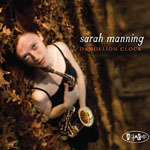
AAJ Review of Dandelion Clock


By Woodrow Wilkins

It may take years of listening before a music enthusiast can identify the sound of a musician, distinct and separate from others who play the same instrument. David Sanborn, Bob Mintzer and Jay Beckenstein are just a few examples of saxophonists whose voices are easily distinguished. Sarah Manning hopes to join their ranks.

Manning began playing jazz during junior high school, where her dissonant arrangements caught the attention of the school’s founder, Jackie McLean. She later entered the jazz studies program at William Paterson College under the direction of Rufus Reid. After more studies and a move to the West Coast, Manning embarked on a recording career.

“Marble” is one of seven Manning originals. It’s an easygoing piece that starts off softly, except for the alto’s wail. The mood remains light, despite the energy pickup provided by Art Hirahara’s piano solo. When Manning rejoins the soundscape, she takes the quartet on a free0spirited country drive—not caring where they go but thoroughly enjoying the act of getting there.

Manning awakens slowly to open “I Tell Time by the Dandelion Clock.” After spending a few minutes freshening up, the piano leads the morning workout, assisted by bassist Linda Oh and drummer Kyle Struve. As the alto enters the stretch run, the other instruments kick into high gear—all while the tick-tock of Struve’s rim shots continues.

It may take several years of listening to be able to say, “Yes, that’s Sarah Manning.” However, just one time through Dandelion Clock is enough to know she doesn’t sound like anyone else. Developing a voice isn’t something that every musician does, and not all who do so are distinctive enough. But this collection shows that Manning is clearly on her way.

Track listing: The Peacocks; Marble; Habersham Street; I Tell Time by the Dandelion Clock; Crossing, Waiting; The Owls (Are on the March); Through the Keyhole; Phoenix Song; The Windmills of Your Mind.

Personnel: Sarah Manning: alto saxophone; Art Hirahara: piano; Linda Oh: bass; Kyle Struve: drums.

Posted on

Raul D’Gama’s AAJ review for “Dandelion Clock”…

www.allaboutjazz.com

By RAUL D’GAMA ROSE
 

Track Listing: The Peacocks; Marble; Habersham Street; I Tell the Time by the Dandelion Clock; Crossing, Waiting; The Owls (Are On The March); Through the Keyhole; Phoenix Song; The Windmills of Your Mind.

Personnel: Sarah Manning: alto saxophone; Art Hirahara: piano; Linda Oh: bass; Kyle Struve: drums.

Style: Modern Jazz

Read more reviews of
Dandelion Clock

It takes a long time for the delightful shock of first hearing Sarah Manning’s emphatic, almost blasé, voice—rich, tunefully accented and almost bronzed, as full as a sudden blast of sunshine. The first sounds of her alto saxophone are so indelibly burned in the memory that virtually everything else becomes a blur except undulating glissandos of her melodic outbursts that often end in shy tremolos. The brilliant alto saxophonist waxes eloquent in a forthright, exacting voice, with fluid and bright lines like operatic arias. She tempers them with the concrete imagery of the pastoral, melding with the elasticity of the urbane. The dissonance that arises when the two rub shoulders is palpable, yet ever so magical. Hers is a singular voice, although it sometimes recalls the sharp altissimo grace ofJohnny Hodges.

On Dandelion Clock, Manning brings all her aquiline tones and textures to bear on seven unique compositions and two classic tracks that she makes her own, from the first notes. She is ably assisted by pianist Art Hirahara, an excellent foil with his tempered notes and fluid style. But then bassistLinda Oh adds her sharply stabbing notes and Kyle Struve is entrancing with his dancing, melodic manner in which he coaxes sounds from the delicately tuned drums. Much has been written about the unique imprint of Manning’s compositions. Like her alto playing, she writes like no one else. And her narratives are perfectly suited to her playing. She lets the topography of each song define the story. The crepuscular “The Owls (Are On The March)” and almost gothic “Phoenix Song” are dark nocturnes, echoing with a strange blend of the horror of post dusk hours and an almost mystical union with the sound of the night. Her saxophone is beyond evocative, in an almost prowling way.

“Through The Keyhole” comes alive with imagery that appears through sharply squeezed notes which flow abundantly. “Marble,” “Habersham Street” and “Crossing, Waiting” unravel like water colors that remain wet and almost amorphous. Only “I Tell the Time by the Dandelion Clock” suggests a slanted story with its fantastic images and melodic dalliances. Among the equally memorable moments on the album are the brilliant renderings of, first, Jimmy Rowles’ “The Peacocks,” a beautiful song full of meandering glissandos and seemingly punctuated by fatal cries at its end. Then there is Michel Legrand’s famous tune from the film The Thomas Crown Affair, “The Windmills of Your Mind.” The supercharged energy of the song is built up by a lengthy introduction with tremulous excitement, so that when the melody is first sounded, the anticipation makes it all the more breathtaking. And this is not the least because of Manning’s plaintive reading.

It may be time to explore further the breathtaking world of Sarah Manning. Dandelion Clock may be only the beginning.


“Through The Keyhole” comes alive with imagery that appears through sharply squeezed notes which flow abundantly. “Marble,” “Habersham Street” and “Crossing, Waiting” unravel like water colors that remain wet and almost amorphous. Only “I Tell the Time by the Dandelion Clock” suggests a slanted story with its fantastic images and melodic dalliances. Among the equally memorable moments on the album are the brilliant renderings of, first, Jimmy Rowles’ “The Peacocks,” a beautiful song full of meandering glissandos and seemingly punctuated by fatal cries at its end. Then there is Michel Legrand’s famous tune from the film The Thomas Crown Affair, “The Windmills of Your Mind.” The supercharged energy of the song is built up by a lengthy introduction with tremulous excitement, so that when the melody is first sounded, the anticipation makes it all the more breathtaking. And this is not the least because of Manning’s plaintive reading.

It may be time to explore further the breathtaking world of Sarah Manning. Dandelion Clock may be only the beginning.


Posted on

Audiophile Audition review for Steve Davis “Images”…

www.audaud.com

Steve Davis – Images – Posi-Tone PR8066, 56:13 ****½:
(Steve Davis, trombone; Mike DiRubbo, alto sax; David Bryant, piano; Josh Evans, trumpet & Flugelhorn; Dezron Douglas, bass; Eric McPherson, drums; Kris Jensen, tenor sax on “Club 880”)

Steve Davis graduated from the University of Hartford in 1989, where he studied under the tutelage of the master, Jackie McLean. After graduation, Davis soon hit the road with Art Blakey. He returned to Hartford in 1992, and has resided there since. On Davis’ latest Posi-Tone release Steve honors his home town on Images -The Hartford Suite. What appears to be the Hartford skyline graces the front cover of the CD. Inside, with the limited liner notes, is a mini-map of the town.

Images contains my kind of jazz – straight ahead classic hard bop, which retains its luster through repeated listening. Like a Jazz Messengers band, Davis’ group blends cohesively, with standout drummer Eric McPherson, like Blakey, driving the beat with cymbal work. Once again producer Marc Free, and engineer Nick O’Toole, have done a righteous job in getting the sound mix just perfect. There is an audiophile quality warmness that fills the soundstage with  near-SACD quality that will be appreciated on a stereo system that highlights midrange acoustics.

You will find something to like on every track, whether it be the horn blend on “Nato” before Davis takes his solo; the relaxing sweetness of “The Modernist,”; the unheralded work of David Bryant on piano and Josh Evans on trumpet and flugelhorn; or the “visits” to the neighborhoods in town described by Davis in his liner notes. Steve honors Nat Reeves on “Nato”, Jackie McLean on “J Mac’s Way”, and jazz clubs Kenney’s and Club 880.

A reviewer’s dilemma in critiquing a CD like Images is that every track pleases and it is difficult to not describe every track in an overly long review. So, I’ll just say that if you love 1960s Blue Note horn-driven hard bop (and most any true jazz LP collector fits into this category), you can’t go wrong taking in the “Images” that Steve Davis brings to the table in his paean to his home town. Now if he only had time to run for mayor. “No new taxes, and jazz on every corner…”

TrackList: Nato, The Modernist, Twain’s World, J Mac’s Way, Mode for Miantonomoh, Rose Garden, Tune for Calhoun, Park Street, Kenny’s Club 880

– Jeff Krow


Posted on

Peter Hum review for Steve Davis “Images”…

communities.canada.com

From New York trombonist Steve Davis come two CDs — the hardbopping Images…

Images is a set of crisp, well-executed originals from Davis, who turns 43 this year but who began his career nearly two decades ago as a sideman in Art Blakey’s Jazz Messengers, that quintessential hardbop band. Just as Davis as stayed true to his stylistic preference in jazz, he’s been associated throughout his career with the the Hartt School of Music at the University of Connecticut in Hartford Hartford in Connecticut — he graduated from that school before joining Blakey, joined the school’s faculty a few years later, and Images includes compositions from Davis’ Hartford Suite.

Joining Davis are alto saxophonist Mike DiRubbo, young and fleet-fingered pianist David Bryant, the gutsy bassist Dezron Douglas, drummer Eric McPherson, trumpeter Josh Evans and, on the final track, Club 880,  tenor saxophonist Kris Jensen. With his core sextet, Davis has basically assembled a special forces unit of swing, with crack players who fulfill their duties with utter clarity and efficiency. Each track is crisply conceived and utterly in-the-pocket in terms of its execution. I especially like the catchy Twain’s World, with its swirling intro, modern Messengers feel and snazzy arrangement, and the expansive, waltzing Mode for Miantonomoh. The classic-style ballad Rose Garden makes me think of Billy Strayhorn’s writing. Cumulatively, there might be a feeling that there’s either not enough soloing at length or too many tunes, But each track sounds just fine in its heat of the moment.

Posted on

Traditional jazz gets a modern sound.

www.audaud.com

Dan Pratt Organ Quartet – Toe the Line – Posi-Tone Records PR8059, 59:31 ****:

(Dan Pratt, tenor saxophone; Alan Ferber, trombone; Jared Gold, Hammond B3 Organ;  Mark Ferber, drums)

Dan Pratt has rapidly established himself as a force in the modern jazz movement. In high school, he performed with the Monterey Jazz Festival High School Band, and then attended the Berklee School of Music in Boston. The prestigious Thelonious Monk Institute would also help in developing his performance and composition skills. He has become a fixture in the burgeoning Brooklyn, New York jazz scene, playing with a wide array of accomplished musicians. The Dan Pratt Quartet was formed in 2001.

The latest offering, Toe The Line, is an ambitious, creative step in the maturation of this artist. The nine tacks, including eight original pieces, emphasize the synergy of the quartet, while exploring various sounds, melody and rhythm shifts, and improvisation. The members are able to experiment with different tones and playing styles.

On the opening track, “Houdini”, the drum and organ lay down a groove beat, as the saxophone and trombone play dual lead, and swap solos. There is a sophisticated take on the Ellington-Strayhorn “Star Crossed Lovers” that showcases the two horns in a soft counterpoint, moving into a bluesy ballad, with a whimsical organ background.  Jared Gold’s organ play is featured in many different styles, allowing him to rise to the level of the writing.  He lays down an incandescent solo on the title track, “Toe The Line”, and shows a funky groove feel on “Wanderlust”, and “Minor Procedure”.  Mark Ferber’s drumming is integral in the cohesion of the sound, and his solo on “Uncle Underpants” delivers a ferocious backbeat.

Pratt’s saxophone work is textured on every song. He manages to trade riffs with trombonist, Alan Ferber in a seamless manner. On the hard bop Doppleganger there are energized and smooth trombone solos. The final song, “After”, is a soulful and moody ballad, with a notable saxophone opening solo and church organ accompaniment. The song builds to a harmonious, gospel crescendo that finds the group at its best, again.

TrackList: Houdini; Minor Procedure; Wanderlust; Doppelganger, Star Crossed Lovers; Toe The Line; Stoic; Uncle Underpants; After.

— Robbie Gerson

Posted on

Due Reverence is served up on the jazzbreakfast…

thejazzbreakfast.wordpress.com

Disc of the day: 25-05-10

Posted on 25 May 2010 by peterbacon

Ralph Bowen: Due Reverence (Positone PR8061)
The New York tenor player and associate prof of jazz studies at Rutgers University might not be a household name over here in the UK, but you can judge the measure of the man by his sidemen here: Sean Jones on trumpet, Adam Rogers on guitar, John Patitucci on bass and Antonio Sanchez on drums.

The five tracks are all originals and all have dedicatees, figures from the music both past and present, and mostly involved in jazz education.

The opener is Less Is More, written to honour Ted Dunbar, guitarist, numerologist, and past prof at Rutgers. As the title suggests it is a plain and graceful Latin-rhythmed number very much in the mood of Freddie Hubbard’s Little Sunflower . The Bob in question in This One’s For Bob is Bob Mintzer, and it’s a tongue-tangling pattern exercise turned into a speedy hard-bop piece.

Mr Scott, the longest piece and presumably honouring the Ragtime composer James Scott, is also the most satisfying, with a lovely surge and release feel to it, and outstanding solos from Jones and Bowen. The finale, Points Encountered, is a prime example of a contemporary twisting and turning jazz composition. Very classy support from Rogers, Patitucci and Sanchez to Bowen’s fleet solo, and fascinating improv from Rogers.

Some great playing on this album. Bowen is an impressive saxophonist, though I wish he would restrain his constant urge to build every solo to a way up in the altissimo register climax – while it may display considerable technical skill it is also a cliched route to a thrill.