Posted on Leave a comment

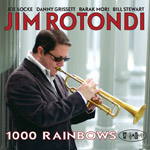
Jeff Krow of Audiophile Audition gives his review of Jim Rotondi “1000 Rainbows” …..

By Jeff Krow
Jim Rotondi – 1000 Rainbows – Posi-Tone PR8062, 52:34 ****½:

(Jim Rotondi, trumpet; Joe Locke, vibes; Danny Grissett, piano; Barak Mori, bass; Bill Stewart, drums)

Jim Rotondi is one bad cat. He can purr on his trumpet or growl like a tiger on a hunt, whether with the collective hard bop super band, One for All, or in a quintet setting as a leader, like on his latest issue for Posi-Tone, 1000 Rainbows, where he is the sole horn. In his abilities, he so much brings to mind either Lee Morgan or Freddie Hubbard, as a take no prisoners trumpeter.

In a savvy move, Posi-Tone has paired Rotondi with vibes star, Joe Locke, on 1000 Rainbows, and the two make a great combination. Locke brings a sparkling sheen to the mix both comping behind Jim, playing his own glistening solos or teaming with pianist Danny Grissett, bassist, Barak Mori, and veteran drummer, Bill Stewart, to add percussion to balance Rotondi’s strut. Locke adds so much to a session lighting a fuse behind the other musicians and his effect is especially pronounced on both Grissett and Rotondi.

“Bizarro World” comes charging out as a strong opener. Stewart’s pulse bristles and Locke and Rotondi seem to be lit with energy. The Beatles’ “We Can Work It Out” features Locke, after the band plays several choruses of the familiar theme. Producer Marc Free and engineer Nick O’Toole again have the acoustics rock solid where Rotondi’s warm, burnished mid range talents are paired with well mixed drums, and crystal clear piano and vibe tones. Mixed and mastered at Studio 507 in Los Angeles, the acoustics are as good as you’ll find on conventional CD.

“One for Felix” initially has Rotondi’s presence felt center stage, but when Locke steps up. you immediately know he and Danny Grissett could have held the listener’s interest if Rotondi had sat out. The same could be said for most any track as the rhythm section is that tight.

Locke’s “Crescent Street” gave me a NOLA feel in its theme, and Joe really digs in mid track as the mallets fly. “Born to Be Blue” is a lovely ballad, and shows Jim’s tender side. You can imagine this tune being played late night on a third set, while looking out the window on a New York skyline. Bill Mobley’s “49th Street” benefits from Rotondi’s muted trumpet and Bill Stewart’s funky pulse. Bassist Barak Mori, gets some space to share the limelight with Grissett before Rotondi reasserts himself with Mori matching him with a steady bottom beat that he keeps up through Locke’s solo.

1000 Rainbows closes with “Not Like This” with a heavy-reverbed vibraphone from Joe teamed with Jim’s neoclassical horn lines. Just 2:49 in length it is a soft fade-out to the brightness of 1000 Rainbows. If only this light show could make its way across the country and not let the Big Apple get all the treats.

TrackList: Bizarro World, We Can Work It Out, One for Felix, 1000 Rainbows, Crescent Street, Born to Be Blue, Gravitude, 49th Street, Not Like This

Posted on Leave a comment

A very positive write up for JIm Rotondi “1000 Rainbows” by AAJ writer Dan Bilawsky…


By Dan Bilawsky

Trumpeter Jim Rotondi’s steady stream of solo albums and work with the collective supergroup One For All—along with his role as a jazz educator and Selmer clinician—have put him at the epicenter of the jazz world. For this, his third album on Posi-Tone Records, Rotondi rounded up some fellow Big Apple-based heavy hitters to join him, including vibraphonist Joe Locke and drummer Bill Stewart.

Rotondi tackles everything from The Beatles to Buddy Montgomery on 1000 Rainbows and, just like a rainbow covers a whole spectrum of colors, Rotondi spans a broad range of styles. “Bizzaro World” moves from a Latin groove to a double-time swing feel, introducing the trumpet and vibraphone frontline that is featured prominently throughout. “We Can Work It Out” touches on the popular Lennon/McCartney melody before moving on to serve as a platform for some impressive soloing. Locke has some rapid runs across the vibes, while Rotondi throws in a few tornado-tongued licks and pianist Danny Grissett reaches into his blues bag, during their respective solos.

Rotondi makes sure to throw a jazz waltz into the mix with his engaging “One For Felix,” while the title track—underscored by a hip, slow-strutting groove from Stewart and a bass line from Barak Mori that manages to be both nonchalant and full of attitude—proves to be an album highlight. Locke’s “Crescent Street” is full of tricky unison hits, and everybody, save Mori, gets some room to let loose. Rotondi and Locke have some terrific solo exchanges on “Gravitude,” while both Grissett and Stewart are superb in their solo spots. Rotondi provides some muted magic on “49th Street,” and Mori gets his only solo spot on the album.

While the trumpeter clearly excels on the livelier material, ballads also have their place. “Born To Be Blue” features some sensitive work from Rotondi and Grissett, but the all-too-brief take on “Not Like This”—with a gorgeous blend of vibraphone and trumpet that comes off as musical reverie—carries more impact.

In the end, this album is a story of numbers. Five superb musicians came together as one to create the nine tracks that make up the singularly superb 1000 Rainbows.

Track listing: Bizzaro World; We Can Work It Out; One For Felix; 1000 Rainbows; Crescent Street; Born To Be Blue; Gravitude; 49th Street; Not Like This.

Personnel: Jim Rotondi: trumpet; Joe Locke: vibraphone; Danny Grissett: piano; Barak Mori: bass; Bill Stewart: drums.
Read more reviews of 1000 Rainbows.

Posted on Leave a comment

Here’s the first review in for our next release by Jim Rotondi “1000 Rainbows” …

Jim Rotondi – 1000 Rainbows (2010)

by Pico

It must have been quite a journey for a life that started out in the wide open ranges of Montana and ended up in the hustle and bustle of the New York jazz scene, but trumpet player Jim Rotondi got there with an assist from the late, great trumpet player Clifford Brown. Playing at first the piano at age eight and then the trumpet at age twelve, when Rotondi got his first taste of the sweet sounds of Clifford a couple of years later, his life’s calling was cast. Having attended the highly regarded music program at the University of North Texas, Rotondi went on to win competitions and play in the bands of Ray Charles, Bob Mintzer, Lionel Hampton, Lou Donaldson, Charles Earland, Joe Chambers and Curtis Fuller. Nowadays, Rotondi leads his own group. Actually, two groups: an acoustic quintet featuring vibes player Joe Locke and an electric group. Rotondi also help to create the supergroup sextet One For All, where he shares a front line with Steve Davis and Eric Alexander.

Rotondi has been recording as a leader starting in 1997 and has released around a dozen albums. Next week comes his third for Posi-Tone Records, 1000 Rainbows. Rotondi goes with the quintet getup for this date, with Locke on vibes, Danny Grissett on piano, Barak Mori on bass and one of John Scofield’s favorite drummers, Bill Stewart, manning the kit. The mission for this record is not complicated: they are playing undiluted mainstream jazz in a tasteful, virtuosic fashion, using both Rotondi originals and some standards from a wide cross section of sources.

“Bizarro World” gets the proceedings off to a brisk start, where Rotondi’s polished and distinctive trumpet playing style is evident in both the theme and solo breaks. The 1965 Beatles hit “We Can Work It Out” is completely overhauled into a nice, mid-tempo groover, so much so that it’s not recognizable. Stewart’s drum work is exemplary throughout, and his shuffling, subtle multi-rhythms on this song exemplify why. The Buddy Montgomery tune “1000 Rainbows” is worth listening to for Rotondi’s warm, inviting tone alone.

On the quicker “Crescent Street,” Rotondi shows of some fleckless chops without pouring on too much flash, and for the evergreen Mel Tormé ballad “Born To Be Blue,” he plays with a cool sensibility that dances around the lyric lines in a fanciful way. In “Gravitude,” Rotondi engages in some lively call-and response with Locke, one of the rare instances I’ve heard one between a trumpeter and and vibraphonist. For “49th Street,” Rotondi, Grissett and Locke play the long, snaky bop line in unison, a startling display of unity. For the duo performance of “Not Like This,” Locke’s impressionistic vibes pulses are used as a backdrop for Rotondi’s inviting intonations.

With the introduction of 1000 Rainbows next Tuesday, Jim Rotondi gives us another reason to follow the career of this accomplished performer, composer and educator. This is a solid effort worthy of several spins.

Posted on

Listener’s Notes – From the CD Stack: Gold, DPOQ….

http://markehayes.blogspot.com/2010/08/listeners-notes-from-cd-stack-gold-dpoq.html

Listener’s Notes – From the CD Stack: Gold, DPOQ

by Mark E Hayes
It’s time to pick my favorites from the stack of CD’s that’s been piling up over the summer.  Week-to-week, I receive an awful lot of music to review, so here’s the deal.  Any new release gets a quick hearing on the stereo in the study, which might lead to a full rip onto my laptop, which is followed by a sync to my iPod.  If a new release makes it to the iPod, it means I’m going to be listening to it everywhere.
The one album I queued up most often was organist Jared Gold’s Supersonic (Positone 2010). Gold — the musician, NOT the goth fashion designer— has played with Dan Pratt, Randy Napoleon, and Avi Rothbard, but many people will likely know Gold’s work from guitarist Mark Stryker’s excellent 2007 release, The Chaser.  On Supersonic, Gold roots himself in the classic organ trio combo, with Ed Cherry on guitar and McClenty Hunter on drums.  Every track on the album has its rewards: uptempo numbers are clever and funky, ballads are cool and soulful, and interplay between band members is balanced. I’m sure I’m not alone in my deep appreciation of the opening track, a brisk reworking of John Sebastian’s theme from Welcome Back, Kotter. With an opening like that, Supersonic grabs you from the start and doesn’t let go.  A thoroughly groovy time.

Gold provides support in the second release from the Dan Pratt Organ Quartet, Toe The Line (Positone 2010) , a thoroughly confident second release from the saxophonist’s group, which is rounded out by trombonist Alan Ferber and drummer Mark Ferber.  Powerful and precise, both Pratt and Alan Ferber carry every tune forward with a clear sense of working together, then playing off each other when the moment calls for it.  Gold and Mark Ferber fill the remaining sonic space masterfully — no easy task given the challenging nature of Pratt’s compositions.  The excellent playing aside, what is most remarkable about Toe The Line is the writing.  Aside from the Ellington tune, “The Star Crossed Lovers,” every song is a Pratt composition.  From the angular bebop opening of “Minor Procedure,” to the Monk-ish “Doppelganger,” to the whimsical “Uncle Underpants,”  and to the souful, gorgeous “After,” Pratt has put together a range of songs that leaves little doubt as to the prowess of his songwriting skills. Toe The Line gets better each time you listen — on the strength of the songs.


Posted on

Cory Weeds writes about 1000 Rainbows…

cweeds.wordpress.com

Well we finally arrived after a much longer drive than necessary.  We went through Kamloops to get to Kaslo which our good friends at Google.com suggested was the quickest route.  I guess if everything goes as planned then it is the best way but a 2 hour ferry wait, terrible signage and by terrible I mean NO signage and many stop to find out where the hell we were going makes for a long journey. A 9 hour jaunt took about 12 hours.  We finally made it and everything is good!

The highlight listening wise for the trip was JIM ROTONDI’S 1000 RAINBOWS on Positone.  It took me a minute to get to it. The first attempt was foiled because despite listening on my iPod, the band leader insisted on having CHRIS POTTER’s ULTRA HANG cranked so I had to succumb to the volume and wait for a quieter moment to put on Rotondi’s new date.  It was well worth the wait.  Jimbo has the rhythm section all switched up for this date and although I can listen to Webber/Hazeltine/Farnsworth forever it was nice to hear some different cats behind Rotondi.  On drums BILL STEWART, bass BARAK MORI and piano DANNY GRISSETT and some very tasty work by vibraphonist JOE LOCKE.  I think I may have mentioned this in a previous post but Jim is always writing and is always making adjustments to his tunes.  During our tour in 2009 he was pulling out all kinds of tunes that he was thinking of playing on record dates to haer how they sounded and then the next time we would play the tune it would be  a little bit different.  He puts a lot of care and attention into his writing and it shows.  Finely crafted gems are featured throughout this record.  One For Felixis fantastic!  I really love the duo rendition of Not Like This.  It’s just Rotondi and Locke and they just play the melody.  In Jim’s words, “there isn’t really much else you need to do on this tune, playing the melody is a complete statement.” The lush sound of the vibraphone is behind Jim’s beautiful trumpet sound is phenomenal.  Danny Grissett (who will be at The Cellar in December with Jeremy Pelt) also shines throughout this date!

Okay, off the festival!


Posted on Leave a comment

Bruce Lindsay’s AAJ review for Fowser & Gillece’s “Little Echo”….


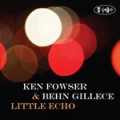
Little Echo is a delightful collection of bop-influenced tunes—contemporary, but with the authentic sound of a classic late-’50s or early-’60s ensemble. The quintet sounds like it brings many decades of experience to the recording yet the co-leaders and composers, saxophonist Ken Fowser and vibes player Behn Gillece, are still only in their late-20s. This is their second quintet album although their debut, Full View (Posi-tone Records, 2009), featured a different rhythm section.

Fowser’s tenor playing is characterised by a brightness that complements Gillece’s ringing vibraphone sound, giving their playing a welcoming, positive, feel. Gillece has composed most of the tunes here—Fowser contributed “Ninety Five” and “One Step at a Time”—but every track finds the pair sharing the limelight whether playing tight unison parts or trading solos. Their unison playing is splendid—exemplified on “Sap,” where they play hard and fast, on the smoother groove of “Resolutions” or on “Another View” where they show a funkier edge. Each man can solo with verve as well, as can pianist Rick Germanson whose piano style can move from gutsy and swinging to more understated playing with apparent ease.

Although Fowser and Gillece get their names on the cover, this is very definitely an ensemble recording. The three remaining members of the quintet are crucial to the album’s sound, underpinning the sax and vibes with some exemplary rhythm work. Drummer Quincy Davis has a light and sensitive touch: his subtle playing ensures that the tunes swing but never intrudes on the front-line players. Ugonna Okegwo’s bass playing is always thoughtful and considered, a perfect match for Davis whether driving upbeat tunes like “One Step at a Time” or adding softer, more emotive, tones to “The Dog Days” or “You.”

Little Echo is an assured album from a fine quintet. Fowser and Gillece are an extremely effective partnership and the band readily creates a welcoming atmosphere with stylish and confident musicianship. Marc Free’s production is superb and the Posi-tone “house style” packaging adds another touch of quality to the album.

Track listing: Resolutions; Ninety Five; Sap; The Dog Days; Vigilance; Little Echo; One Step at a Time; You; Another View.

Personnel: Ken Fowser: tenor sax; Behn Gillece: vibraphone; Rick Germanson: piano; Ugonna Okegwo: bass; Quincy Davis: drums.
Read more reviews of Little Echo.

Posted on Leave a comment

John Barron’s insightful review of Fowser/Gillece “Little Echo”….

Ken Fowser & Behn Gillece – Little Echo – Posi-Tone PR8068, 51:45 *****:
(Ken Fowser, tenor saxophone; Behn Gillece, vibraphone; Rick Germanson, piano; Ugonna Okegwo, bass; Quincy Davis, drums)

Ken Fowser and Behn Gillece, two very promising young artists on the Posi-tone label, have added another feather to their cap with Little Echo, their first album made up entirely of new compositions. Fowser on tenor sax and Gillece on vibraphone lead the band, backed by Rick Germanson on piano, Quincy Davis on drums, and Ugonna Okegwo on bass. The rhythm section is tight but subtle, letting the lively and bright melodies take the focus. Throughout much of the album, Germanson on piano forms the backbone of the melody while Fowser and Gillece elaborate. Fowser is excellent, but Gillece especially is a player to remember, with a strong succinct touch and a way of lodging melodies firmly in your head.

The two young players also have an excellent team behind the boards in producer Marc Free and engineer Nick O’Toole. The piano and vibraphone are beautifully captured in the recording, with a shimmering sound that is often lost in digital recording. The quality of the recording also lends the album a nostalgic cast, with the tracks sounding more like 1950s recordings than anything else.

The first two tracks are something of a piece, with melodic themes that complement each other. Resolutions and Ninety Five both feature busy but sunny themes that Fowser and Gillece take in different directions. Fowser deepens the sound and grooves, while Gillece keeps things quick and flowing, with an infectious sound that makes the listener want to throw a party.

Sap and Vigilance have slightly more complex structures and a little more rhythmic meat on their bones, and the band adapts easily. Vigilance is a particularly great composition, and if any filmmakers are listening they should keep these two on a short list for soundtrack work based on this number.

Another View closes out the album. Germanson has a fantastic solo early in the song, but its Gillece’s solo around the two and a half minute mark that steals the show.
Buy Little Echo, play it for company, and spread the word about these exciting young jazz artists.

TrackList: Resolutions, Ninety Five, Sap, The Dog Days, Vigilance, Little Echo, One Step At A Time, You, Another View

– Ethan Krow

Posted on Leave a comment

Audiophile Audition weighs in favorably on Ken Fowser and Behn Gillece’s latest CD “Little Echo”…


Ken Fowser & Behn Gillece – Little Echo – Posi-Tone PR8068, 51:45 *****:
(Ken Fowser, tenor saxophone; Behn Gillece, vibraphone; Rick Germanson, piano; Ugonna Okegwo, bass; Quincy Davis, drums)

Ken Fowser and Behn Gillece, two very promising young artists on the Posi-tone label, have added another feather to their cap with Little Echo, their first album made up entirely of new compositions. Fowser on tenor sax and Gillece on vibraphone lead the band, backed by Rick Germanson on piano, Quincy Davis on drums, and Ugonna Okegwo on bass. The rhythm section is tight but subtle, letting the lively and bright melodies take the focus. Throughout much of the album, Germanson on piano forms the backbone of the melody while Fowser and Gillece elaborate. Fowser is excellent, but Gillece especially is a player to remember, with a strong succinct touch and a way of lodging melodies firmly in your head.

The two young players also have an excellent team behind the boards in producer Marc Free and engineer Nick O’Toole. The piano and vibraphone are beautifully captured in the recording, with a shimmering sound that is often lost in digital recording. The quality of the recording also lends the album a nostalgic cast, with the tracks sounding more like 1950s recordings than anything else.

The first two tracks are something of a piece, with melodic themes that complement each other. Resolutions and Ninety Five both feature busy but sunny themes that Fowser and Gillece take in different directions. Fowser deepens the sound and grooves, while Gillece keeps things quick and flowing, with an infectious sound that makes the listener want to throw a party.

Sap and Vigilance have slightly more complex structures and a little more rhythmic meat on their bones, and the band adapts easily. Vigilance is a particularly great composition, and if any filmmakers are listening they should keep these two on a short list for soundtrack work based on this number.

Another View closes out the album. Germanson has a fantastic solo early in the song, but its Gillece’s solo around the two and a half minute mark that steals the show.
Buy Little Echo, play it for company, and spread the word about these exciting young jazz artists.

TrackList: Resolutions, Ninety Five, Sap, The Dog Days, Vigilance, Little Echo, One Step At A Time, You, Another View

– Ethan Krow

Posted on

Improv and Avant Garde review of Trigonometry by Glen Hall from exclaim

exclaim.ca

Trigonometry

Reviews breadcrumbsplit IMPROV & AVANT-GARDE breadcrumbsplit Jul 2010

Jacám Manricks - Trigonometry

By Glen Hall
With imposing technical fluidity, impressive command of shifting metres and inspiring compositional conception, alto-saxophonist Manricks makes the intricacies of his music seem like no big deal. He’s that strong a musician. Knotty tunes with shifting accents like “Trigonometry” and “Cluster Funk” are delivered with remarkable effortlessness. His tone is sweet and his technique graceful, even when he’s firing out complex lines that resolve with unexpected suddenness, as on “Slippery.” Manricks’ sidemen (pianist Gary Versace and drummer Obed Calvaire) are definitely up to the leader’s demanding charts. They dig in and deliver on every tune, playing with a funkiness that undercuts the cerebral nature of some of the material. On the only tune not penned by the leader (Eric Dolphy’s “Miss Ann”), the altoist’s limpid tone sounds somewhat at odds with the angularity of the line. But on closer “Micro Gravity,” Manricks loses himself in the moment, lashing out and delivering a burning solo that points to where we might find him on his next outing.
(Posi-Tone)
Posted on

Review: Trigonometry by Ken Dryden from allmusic.com

Cover (Trigonometry:Jacam Manricks)

www.allmusic.com

Rating

star_rating(7)

Review

by Ken Dryden

Jacam Manricks is one of many Young Lions who emerged on the jazz scene in the opening decade of the 21st century. This young jazz educator has played with the Vanguard Jazz OrchestraDavid LiebmanBob MintzerJames Morrison, and Dick Oatts, among others.Trigonometry is his second CD, following his self-issued 2009 debut Labyrinth, though he uses a different backing band, including pianist Gary Versace, trombonist Alan Ferber, trumpeter Scott Wendholt, bassist Joe Martin, and drummer Obed Calvaire. All but one of the ten tracks are originals, though Manricks has a gift for writing compositions that leave lasting impressions. His somewhat dark “Mood Swing” incorporates overdubbed alto and tenor saxes, with Versace‘s brooding solo as the centerpiece. The whimsical “Cluster Funk” also utilizes alto in lead with a tenor providing harmony, adding trumpet and trombone for color. “Slippery” keeps twisting away from the expected path, with Manricks‘ alto engaging in a bit of Eric Dolphy-like dissonance. He salutes Dolphy by interpreting the late multi-reed player’s rarely performed “Miss Ann,” though omitting the piano, relying on bass and drums alone. He also records new versions of two songs that appeared on his debut CD. “Labyrinth” begins as a free jazz alto solo, with the rhythm section making a delayed entrance, adding a mysterious air. “Micro Gravity” also has a brooding atmosphere, suggesting someone alone mulling a problem in despair. Throughout the session Manricks demonstrates that he is well on his way to developing a personal sound on alto, while Versace‘s support on piano meshes well with the leader. Jacam Manricks is proof that the old saying “Those who can’t, teach” does not apply to jazz educators.