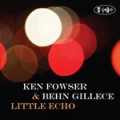
Tenor saxophonist Ken Fowser and vibraphonist Behn Gillece have been playing jazz together since they were growing up in Philadelphia. Now based in New York City, the co-leaders are joined on this album by Rick Germanson on piano, Ugonna Okegwo on bass and Quincy Davis on drums. The result is a classy album of mainstream jazz with a bit of a Bags & Trane vibe, with bright sounding boppish saxophone and light, nimble vibes leading the way. The opening “Resolutions” sets the tone for the remainder of the album, establishing a medium tempo-ed swinging groove, and setting the stage for a series of short round robin solos. “Sap” shows the band playing in an uptempo and probing nature, spinning off a swinging vibraphone solo and a well controlled saxophone solo. “The Dog Days” slows the proceedings down to a ballad tempo, featuring spare and open light sounding vibes, and a slow and languid saxophone solo reflecting the lazy grandeur of the title. “One Step at a Time” has a sharp and classy aura centering on some deeply swinging saxophone that spirals out at length on a fine statement. While all of the tracks on the album proper are originals, a bonus track included in the eMusic download is a real treat, the standard “A Nightingale Sang In Berkeley Square” taken as a slow and tender ballad with Fowser building a patient and thoughtful solo that really tells a story and makes the melodic nature of their improvisation stand out. This was a solidly swinging album of mainstream jazz from some promising young musicians. On the whole it is classy and well performed and recommended to mainstream jazz fans.
Category: Reviews
Glenn Astarita’s review of Jacam Manricks “Trigonometry” for eJazzNews…
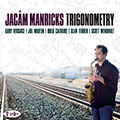
Saxophonist/composer Jacam Manricks’ 2009 release “Labyrinth,” looms as a captivating artistic statement. Composed for jazz quintet and chamber orchestra, Manricks conveyed great depth and enveloped quite a few jazz-tinged frameworks into the grand schema. Similar attributes emerge on this 2010 follow-up, featuring some modern-day jazz titans amid an aggregation of cunning developments that reveal additional insights on repeated listens.
Manricks has taught at estimable music institutions while honing his crafty with other notables, including the late Ray Charles.
With this effort, he lays out an intricate mosaic of song-forms, spanning odd-metered funk, breezy choruses, buoyant time signatures and much more. But it’s how he interconnects the various parts that yield the bountiful fruit, to complement the band-members’ luminous and at times, gritty soloing spots.
On the wittily titled “Cluster Funk,” the leader incorporates R&B and mainstream jazz with a progressive edge, emphasized by the hornists’ punctuating notes. However, Manricks ability to fuse quirky deviations into the roads frequently traversed provides an exciting element, where organized decomposition attains equal ground with structure. His dense compositional methodologies remain true to form on ballads, evidenced by lush voicings, thrusting crescendos and a little big band impetus during the piece titled “Nucleus.” In other regions of the program, Manricks injects staggered flows and off-kilter metrics to coincide with the ensemble’s blitzing unison lines and memorable hooks. No doubt, Trigonometry is a compelling musical study in divergent angles, rolling waves and supple underpinnings. – Glenn Astarita
Track listing: Trigonometry; Cluster Funk; Slippery; Nucleus; Miss Ann; Sketch; Mood Swing; Labyrinth; Combat; Micro Gravity.
Personnel: Jacám Manrickss: saxophones; Gary Versace: piano; Joe Martin: bass; Obed Calvaire: drums; Alan Ferber: trombone; Scott Wendholt: trumpet.
www.posi-tone.com
Derek Taylor weighs in with his take on Jim Rotondi “1000 Rainbows”….
by Derek Taylor
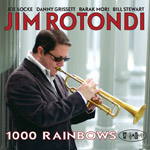
Contextual questions of excessive repertory fealty are largely moot in the music of Jim Rotondi. A trumpeter who’s canny style blends Hubbard-like velocity and clarity with a persuasive lyricism, his fixation on a stripes of hardbop steeped in 60s Blue Note decorum is hardly worth getting bent about, though there are those who would likely fault him for it just the same. This set couples his lubricious brass with Joe Locke’s vibes and a standard rhythm section for a nine-song program that moves along at a brisk and mannered clip from the opening incisiveness of “Bizzaro World” through the lovely tone poem closer “Not Like This”.
Locke is a veteran player versed in a set of antecedents similar to those favored by his employer. He’s also imbued with a comparable instrumental command that engages multiple mallets in the crafting of complex melodic leads. He and Rotondi make for sharply cast team in the company of pianist Danny Grissett, bassist Barak Mori and drummer Bill Stewart, all of whom unflappably fulfill their respective roles. Mori and Stewart don’t get much in the way of solo space, but each man still makes his presence known through cogent and creative support.
The set list combines a handful of originals with a small clutch of tunes culled from popular songbooks. Buddy Montgomery is the source of the title piece, a lush ballad piece bracketed by soothing ensemble statements. Lennon and McCartney’s “We Can Work it Out” is thankfully denuded of most of its pop baggage, the unison theme working surprisingly well as a blowing vehicle for the two principals. It’s a very pleasant and well-parceled program, one filled with numerous platforms for the leader and Locke to strut their chops. Again, the collaborative catalogs of Hubbard and Hutcherson aren’t too far out of mind when listening to tunes like “Gravitude” and “One for Felix”. That’s hardly a trait worth a grimace or a grouse.
Bruce Lindsay of All About Jazz provides a thoughtful write-up of Jim Rotondi “1000 Rainbows”….
by Bruce Lindsay
1000 Rainbows swings beautifully, drawing together a few original tunes from trumpeter Jim Rotondi and some out-of-the-ordinary classics that are delivered in real style by a classy quintet. The New York-based Rotondi has been in the jazz scene for more than 20 years and has an extensive back catalog of recordings as a leader. This is his third Posi-tone release as leader, following Four Of A Kind (2008) and Blues For Brother Ray (2009).
The musicians on this release are exceptional—they have a real sense of swing and a real feel for melodies, too. Vibes player Joe Locke is outstanding, whether trading solos with Rotondi or adding to the rhythmic drive of pianist Danny Grissett, drummer Bill Stewart and bassist Barak Mori.
Rotondi contributes three of his own compositions to the collection. They’re all accessible, involving, tunes but “Gravitude”—a hard-bop style, driving, up-tempo number—is the standout of the three and features excellent solos from Locke and Rotondi.
The best-known tune here is Lennon and McCartney’s “We Can Work It Out.” Rotondi’s version is more syncopated than the Beatles original, giving the song a fresh edge that’s further enhanced by Grissett’s percussive piano solo. The less well-known “1000 Rainbows” was written by the late vibes player Buddy Montgomery—Mori and Stewart lay down a strong and slinky groove on this tune, while Rotondi and Locke add distinctive solos. The most immediately enjoyable tune is Bill Mobley’s “49th Street.” The tune conjures up a real sense of a bustling New York thoroughfare, with its pacey rhythm. Stewart switches to brushes for the number, Rotondi plays some fine muted trumpet, Locke contributes a warm and uplifting vibes solo and Mori’s bass solo is chunky and fun.
“Not Like This,” written by British-born arranger Jeremy Lubbock and originally recorded by Al Jarreau, closes 1000 Rainbows in fine style. The tune opens with a brief solo from Locke before Rotondi enters to play a straightforward, sparse, melody line with great precision over Locke’s gentle vibes. No one else appears, the front-line duo is all that’s necessary to create a short but lovely performance to end a delightful and rewarding album.
Track listing: Bizzaro World; We Can Work It Out; One for Felix; 1000 Rainbows; Crescent Street; Born to be Blue; Gravitude; 49th Street; Not Like This.
Personnel: Jim Rotondi: trumpet; Joe Locke: vibraphone; Danny Grissett: piano; Barak Mori: bass; Bill Stewart: drums.
A nice review of Jim Rotondi “1000 Rainbows” by Step Tempest blogger Richard Kamins…
By Rickard Kamins
1000 Rainbows – Jim Rotondi (Posi-tone Records) – Jim Rotondi is a trumpeter out of the Freddie Hubbard/ Woody Shaw school with roots in Clifford Brown (his sweet articulated notes remind this listener of Brownie.) On record, he rarely ventures into unknown territory and that’s just fine because his music never sounds stale. Surrounded by veterans like Joe Locke (vibraphone) and Bill Stewart (drums) and younger players Danny Grissett (piano) and Barak Mori (bass), this program is well-played and plenty of fun for the listener.
It may take one a minute or so before you realize the band is hitting on Lennon & McCartney’s “We Can Work It Out” but it’s a smart reworking. Locke glides over the dancing drum work and fine chordal interjections from Grissett before Rotondi jumps in with an assertive solo. The title track is from the pen of Buddy Montgomery, the bassist brother of guitarist Wes and is a medium-tempo confection with a bluesy bass line and a hint of parade drums from Stewart. Rotondi stays in the horn’s mid-range for most of his long solo, really working through the changes. Locke takes over and builds his groove off of the drum patterns. Mori is rock-solid beneath the band, really filling out the sound. The trumpeter swings his socks off on the opening chorus of his original “Gravitude”, moving aside for a short vibes solo and then flying over the changes with an energetic and often fiery solo. “Born to Be Blue” sounds like the kind of music one makes on a rainy day, an smoothly played ballad with sweet solos from the leader and Grissett (Locke sits out this track.) Rotondi uses a mute for the high-stepping “49th Street”, a Bill Mobley composition replete with a dominant bass line (and strong solo), sharp, classy, brushes work and a quick knockout solo from Grissett. One of the highlights is the vibes/trumpet duo that closes the program. “Not Like This” is a heart-felt ballad that British-born arranger Jeremy Lubbock wrote for Al Jarreau. Here, Locke plays the introduction unaccompanied, his notes swirling and reverberating – Rotondi enters and delivers the melody without needless embellishments. The piece is a perfect capper to this most musical experience.
Jim Rotondi has a winner on his hands with “1000 Rainbows” – he and his cohorts may not be “breaking new ground” but this swinging session satisfies the soul. For more information, go to www.posi-tone.com.
Lucid Culture weighs in favorably on Jim Rotondi “1000 Rainbows”…
Trumpeter and Ray Charles alum Jim Rotondi’s new album 1000 Rainbows is a brisk, no-nonsense romp through a mix of strong, memorable themes that an inspired cast – Joe Locke on vibraphone, Danny Grissett on piano, Barak Mori on bass and Bill Stewart on drums – lock onto and charge through with gusto. The opening track, Bizarro World moves from a rumble to a scamper and back and then fades out. A cover of the Beatles’ We Can Work It Out is completely disguised until the verse kicks in, the band messing with the time signature – it would be cool to see what they could do with Penny Lane. Locke takes a long chilly glasses-clinking solo, Rotondi takes his time and goes a little bluesy, then takes it up for Grissett to chill it out again.
An original, One for Felix has Rotondi opening it pensively, then Locke comes slinking in and has the room spinning in seconds flat, Grissett following in a similar vein. The title track, a Bobby Montgomery composition, has piano and bass locking into a hypnotic bossa-tinged groove, Rotondi in tandem with the vibes and then taking a couple of absolutely gorgeous strolls down to the lower registers followed by a pointillistic Locke excursion. Locke’s composition Crescent Street isn’t a New Orleans piece but instead a straight-up swing joint that motors along with some potently rapidfire playing by its author, Rotondi taking his energy level up as well. A bluesy One for My Baby-style ballad, Born to Be Blue gives Rotondi a long, comfortable and expressive solo followed with a wink and a grin by Grissett, who eventually sounds “last call,” Rotondi returning for one more after a long time at the bar. There are also two scampering swing numbers: Rotondi’s Gravitude, where Mori and Grissett push the beat as hard and fast as they can without leaving the rest of the crew in the dust, and an ebulliently bustling take on Bill Mobley’s 49th St. as well as the impressively vivid, almost rubato Not Like That, a conversation between Rotondi’s wistful horn and Locke’s otherworldly, reverberating chords. The album is out now on Posi-Tone. Rotondi’s next NYC appearance is a two-night stand with his quartet featuring Antonio Hart at Smoke on Sept. 3 and 4 at 8 PM.
Peter Hum reviews “Little Echo”…
Little Echo (Posi-Tone)
Ken Fowser & Behn Gillece
Unlike Dana Lauren, the saxophonist Ken Fowser and vibraphonist Behn Gillece, who are a few years older than she is, have a very focused take on their stylistic turf. They are unabashed lovers and perpetrators of hard bop and a brand of modal jazz that more secular than the spiritual style that John Coltrane ushered into being. Some would call Fowser and Gillece guardians of the flame, while others might deride them as “reboppers.”
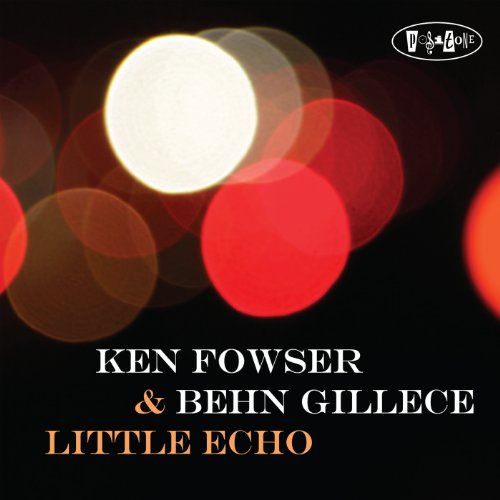 How much you enjoy their disc, Little Echo, might depend in part on where you fall on that flame-keeper/anti-rebop continuum. At the level of genre and style, Little Echo is very much reminiscent of the straight-down-the-middle hard bop and modal jazz that the Blue Note label during the late 1950s and 1960s. It also brings to my mind the discs that featured pianist McCoy Tyner and vibraphonist Bobby Hutcherson.
I don’t have an issue with the stylistic turf that Fowser and Gillece chose to stake out. But the other issue, of course, has to do with the amount of excitement and distinctiveness the disc delivers. In this regard, I’d say that the CD falls short. Here are two excerpts from the disc:
One Step At A Time is a riffing swinger that takes the harmonic grid of Speak Low as its point of departure: Also falling in the disc’s swing category is its opener, Resolution, reminiscent of Four. The disc ends with the bopping medium tune Another View. Other tunes are more modal romps, such as the minor-key tune Sap, the major-key waltz You, and Ninety Five, the simple straight-eighths tune heard below, which strives for a soulful vibe:
For my tastes, too many of the disc’s tunes are a little too basic in terms of structure and and overly riff-based, resulting in a disc that feels to me somewhat generic and predictable rather than specific and surprising. The better tracks are Gillece’s You, which has a bit more harmonic material and emotional heft to it, and the tune Vigilance, which groove-wise is a bit more varied and involved. Best perhaps is the evocative ballad The Dog Days, which finds Gillece and Fowser hitting the right notes of vulnerability and tenderness.
Overall, it’s Gillece’s playing that provides the disc’s highpoints. He’s the most consistently flowing, melodic instrumental voice on Little Echo. Fowser on tenor saxophone has a nice, classic sound, but he plays with less fire and sophistication, I think.
Pianist Rick Germanson, bassist Ugonna Okegwo and drummer Quincy Davis — very much a trio of seasoned musicians — accompany the young leaders and make the music sit in the pocket. But I don’t feel as much engagement with the music and with the session’s leaders as I think their could have been. Germanson, for example, takes a fine solo on You, but some of his other solos — on a piano that incidentally seems a bit tinny to me in the upper registers — strike me as correct and polished, but not more.
Here’s the Lime Wire Music Blog Review for Jim Rotondi “1000 Rainbows”….
By Jim Allen
When it comes to trumpeters on the NYC straight-ahead jazz scene, Jim Rotondi is strictly top-shelf. He’s been making his musical presence felt since the ‘90s, and while he’s deep into his recording career by this point, 1000 Rainbows nevertheless finds him employing an approach that’s not only tonally spotless but emotionally open, achieving a searching quality even while showing miles of sophistication. With a band that includes New York vibes legend Joe Locke and renowned drummer Bill Stewart, Rotondi blows through a batch of tunes that offer plenty of opportunity to show off both his peerless phrasing and his warm, intimate tone. “Born To Be Blue” is a cool-jazz style tune where Rotondi unleashes riffs firmly in the Chet Baker/Miles Davis tradition; the simmering title track is full of impressive improv, from both the bandleader and Locke, while a hard-bop reinvention of The Beatles’ classic “We Can Work It Out” takes the tune so far from its harmonic origins that Rotondi should have his own composers’ credit on the track. There are countless other jazz players in New York who work outside the box, but when it comes to making an impact on the inside, Rotondi offers up a world of colors all his own on 1000 Rainbows.
John Barron of All About Jazz chimes in with his review of Jim Rotondi “1000 Rainbows”….
By John Barron
On his third release as a leader for Posi-Tone Records, acclaimed trumpeter Jim Rotondi leads a stellar quintet of New York heavy-hitters on a straight-ahead presentation of original compositions and standard fare. Featuring the unremitting vibraphone work of Joe Locke, 1000 Rainbows swings hard through up-tempo burners, ballads and laid-back funk grooves.
Rotondi and Locke are as like-minded as they come, unraveling shapely bebop- style lines full of vigor and surprise. The two, plus pianist Danny Grissett, serve up head-turning solos on Locke’s “Crescent Street,” a syncopated reworking of Jerome Kern’s “Yesterdays.” Rotondi’s up-tempo “Bizzaro World,” driven by drummer Bill Stewart, is a showcase for the trumpeter’s rounded tone and fiery technique.
The disc’s two ballads, “Born to Be Blue” and “Not Like This,” affirm Rotondi as a mature voice, informed by his agility and attuned to lyricism, while playfulness is revealed in his clever take on The Beatles’ “We Can Work it Out” and the funky title track.
A veteran of numerous big bands and a founding member of the celebrated sextet One For all, Rotondi has experience on his side. The Montana native has put in the time to develop a distinct voice, illuminated by tradition. 1000 Rainbows is a thorough representation of this exciting and consistent trumpeter.
Track listing: Bizzaro World; We Can Work it Out; One For Felix; 1000 Rainbows; Crescent Street; Born To Be Blue; Gravitude; 49th Street; Not Like This.
Personnel: Jim Rotondi: trumpet; Joe Locke: vibraphone; Danny Grissett: piano; Barak Mori: bass; Bill Stewart: drums.
Lucid Culture reports in joyfully on the classic stylings of Fowser/Gillece “Little Echo”…
Ken Fowser and Behn Gillece Ask, Your Place or Mine?
August 4, 2010
This is what the Mad Men soundtrack ought to sound like. On their new album Little Echo, tenor saxophonist Ken Fowser and his vibraphonist cohort Behn Gillece have teamed up for an absolutely period-perfect, gorgeously melodic collection of golden age-style jazz. This is the kind of thing you can stump your jazz snob friends with: guess which 1959 group this is? Maybe a previously unknown Chico Hamilton session with Hamp, maybe? Even the cd cover images and fonts come straight out of the late 50s Columbia catalog, and for anyone who owns actual physical albums from the era, they’re a dead giveaway. To call this boudoir jazz doesn’t give enough credit to the strength and intelligence of the compositions, but with the nocturnal ambience created by the intermingling of the piano and the vibes, it’s the jazz equivalent of Al Green or Sade. If there’s a population explosion among jazz fans in the next nine months or so, blame these guys. Here Fowser and Gillece – who wrote all but two of the compositions – are joined here by Rick Germanson on piano, the ubiquitously reliable Ugonna Okegwo on bass and Quincy Davis on drums.
The genius of the songs here – and they are songs in the purest sense of the word – is their simplicity: the “jukebox jazz” label recently applied to JD Allen’s recent stuff aptly describes this as well. The band set the tone right off the bat with the ridiculously catchy Resolutions, with brief and vivid solos by Fowser, Gillece and Germanson in turn. A Fowser composition, Ninety Five employs a slinky guaguanco vamp as the launching pad for some balmy sax work followed by a more aggressive turn by Gillece. The band pass the baton around on the next one: Gillece plays a horn line, Germanson scurries along and Fowser bounces off the bass and drums.
The dreamy ballad The Dog Days is a showcase for Fowser sultriness, Germanson impressionism and a hypnotic, slow Gillece solo over steady piano. Upbeat latin tinges and a soaring sax hook give the next cut, Vigilance, a summery blissfulness. Germanson anchors the deliciously noir-tinged latin jazz of the title track as Fowser prowls around on the low notes: the utterly carefree, closing-time style piano solo might be the most vivid moment on the entire album. Fowser’s One Step at a Time offers more than a hint of Gil Evans era Miles Davis; Gillece’s ballad You mines some choicely pensive modalities on the way to the blues; the closing cut Another View works a shameless So What quote into the wee-hours bliss of the opening track.Marc Free’s production goes back to the golden age as well – he doesn’t overcompress the vibes or the piano and puts Okegwo’s tireless bass walks up just high enough that you appreciate all those tireless walks, without making it sound like hip-hop. It’s out now on Posi-Tone Records.