Posted on

Ausjazz Blog reviews Manrick’s Trigonometry

communities.canada.com by ROGER MITCHELL

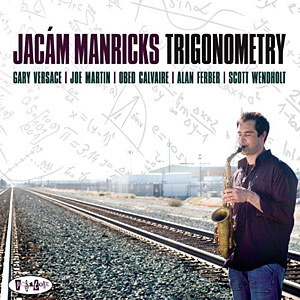
Trigonometry

3.5 stars

FOR his third recording as leader, New York-based saxophonist/composer Manricks has a fresh ensemble for these nine originals — three revisited from the album Labyrinth — and a cover of Eric Dolphy‘s Miss Ann.

Manricks treats Dolphy’s piece deftly and much more mildly. His beautifully expressive sax on the newer Labyrinth has a warmer, engaging tone that infuses the whole album.

Alan Ferber‘s trombone and Scott Wendholt‘s trumpet are used with restraint to enhance Cluster Funk and the pensive Nucleus.

Playing with dextrous liquidity that seems effortless, Manricks is well attuned to his rhythm section of Gary Versace, Joe Martin and Obed Calvaire in what is an intricate, engaging and accomplished outing.


Posted on

Glide Magazine reviews “Out With It” and “Supersonic”…

www.glidemagazine.com

Jared Gold/ Supersonic (Posi-Tone): Emphatically traditional, the keyboardist seems fiercely loyal to the sound of a guitar drums and Hammond B-3 organ trio as first conceived by Jimmy Smith. Yet Gold and company don’t sound static or academic anywhere on this CD, The Beatles: “In My Life” included. On the contrary, there’s a freshness in their playing, the sound  of musicians discovering the the beauty and deceptive simplicity of a classy jazz sound. it’s gratifying to hear the contemporary likes of  Lennon/McCartney compositions set in the context of jazz tradition, boldly rendered as a means of giving the musicians a workout.

David Ashkenazy/ Out With It (Posi-Tone): While the version “I Want You” here is an intense tour de force, David Ashkenazy and company jump right into action on this album with ad adventurous run through of Wayne Shorter’s “Children of the Night.” Covering Stephen Foster as well as Lennon/McCartney is further testament to an element of courage that permeates this entire effort. The inclusion of Beatles material lives up to its durability and flexibility as well as its mainstream fame, during instrumental arrangements develop their own character.

Posted on

another Spanish language review for Faith in Action…

oscuraeralanoche.blogspot.com

Orrin Evans – Faith in action (Posi-Tone, 2010)

Ya un veterano con numerosos discos a su nombre (la mayoría en el sello Criss Cross) que no siempre le hacen justicia, el pianista Orrin Evans debutó este año en Posi-tone, una de las etiquetas más activas en el área del neo-bop.
El disco es casi un homenaje a su antiguo patrón, el saxofonista Bobby Watson (la mitad de los temas son versiones), pero ese es un detalle sin demasiada importancia, ya que cobran nueva vida en sus manos. Aunque la influencia monkiana es palpable en Two steppin’ with dawn, y la huella de McCoy Tyner se deja notar, Evans no se deja clasificar fácilmente y en los temas más vibrantes encontramos semejanzas con el toque percusivo de Geri Allen o incluso de Vijay Iyer (obsérvese el fascinante juego rítmico deDon’t call me Wally o la electrizante tensión de su lectura de Appointment in Milano).
Este estupendo disco confirma que el pianista de Filadelfia es uno de los más destacados del momento, que sea menos conocido que otros nombres más mediocres sólo puede ser achacable a razones de marketing; como en el caso de Mulgrew Miller (otro pianista para pianistas), quizás no ofrezca nada especialmente llamativo con lo que llenar páginas en los medios, sólo música rigurosa e impecable, al fin y al cabo lo más importante.


Posted on Leave a comment

Ken Franckling tips his hat to Jim Rotondi’s “1000 Rainbows”…..

kenfrancklingjazznotes.blogspot.com

Jim Rotondi, 1000 Rainbows (Posi-Tone)
Trumpeter Jim Rotondi is a stalwart member of the New York-based jazz collective One For All. He’s also a great leader and writer in his own right, as evidenced on this third release as a leader on Posi-Tone. Vibes player Joe Locke is a strong front-line foil for Rotondi in this swinging setting and contributes the burner “Crescent Street.” Pianist Danny Grissett, bassist Barak Mori and drummer Bill Stewart add strong support. Favorites: Rotondi’s “Bizzaro World,” the band’s teasing take on the Lennon/McCartney classic “We Can Work It Out,” and the Buddy Montgomery title track, “1000 Rainbows.” The latter is a ballad that has long deserved more recognition. This tip of the hat is most welcome – and beautifully done.

Posted on

Raul D’Gama’s AAJ review for Steve Davis “Images”…

www.allaboutjazz.com

It is easy to mistake trombonist Steve Davis for an aesthete—which he is, possessing an undying sense of lyricism to show for it. But he is a deeper musician than one who merely subscribes to the aesthetical philosophy. Each of Images‘ ten compositions far transcends warmth and lyrical beauty, standing out as astute forms of modal music that recall the finest of their kind. Davis’ ability to enrich the tonal palette of the trombone is commendable. He may not bend and twist the voice of perhaps the most human vocal-like instrument, as Roswell Rudd does. He may not reach into the thin upper registers of the instrument, as Bill Watrous does. Even though he stays fair and square within a comfortable zone— relying, if anything, on an innate bias for the bass register—Davis adorns the sound of the instrument with a husky sensuousness. He caresses, rather than simply playing, the notes. He constructs his solos with breathtaking curvilinear phrases that melt into one another, sometimes holding a note like a spinning top, before letting a cascade of others in a new idea fall on the B side of a solo.

Images has something else to offer. This fine album is played as a loosely connected suite of music dedicated to some fine aspects of Hartford, Connecticut, the trombonist’s home and a place which offers him a slew of memories from which to draw. The interesting aspect of drawing on them for a musical tribute is that the narrative in each pays close attention to the characters that drive each story. As a result, there is a distinctly individual flavor to each part of this suite.

“Nato” is breathless and fluid, “The Modernist” is almost a clinical expression derived, no doubt, from the academic character of the Museum Curator, Chick Austin, of whom the music sings. “Twain’s World” is by turns, impish and provocative. Similarly, “J Mac’s Way” is blasé and harder hitting in parts, aptly describing both character and music of the late alto saxophonist/composer Jackie McLean. “Mode for Miantonomoh” is the high point of the work, a work of exceedingly beautiful melody and harmony. And so on, until “Kenney’s” and “Club 880,” which, like the best final movements in suites classic and modern, sound like a breathtaking climax and, written in their so-called jazz idiom, are fine jams that pulsate with excitement, closing this fine piece of work.

With Images, Davis builds upon his fine legacy of thought-provoking lyricism, as one of the finest trombonists playing today.


Posted on

Raul D’Gama’s AAJ review for “Little Echo”…

www.allaboutjazz.com

If Marc Free, Nick O’Toole and the team at Posi-Tone Records continue producing albums in the same manner as they have been since the inception of the label in 1994, they will surely be further along the path to emulating the legacy of the Blue Note label, which has produced some of the finest music of our time. Little Echo, by saxophonist, Ken Fowser and vibraphonist, Behn Gillece, is a further testament to the label’s determination to keep contemporary music in the jazz idiom alive. These young musicians are sublimely talented and have partnered with pianistRick Germanson, bassist Ugonna Okegwo, and drummer Quincy Davis to produce a memorable gem of a record.

Fowser has a moist, lyrical, broad tone that lopes up and down the tenor registers like a proverbial gazelle. The young vibraphonist, mature beyond his years, is a very expressive player and possesses a bright, resonant tone. His four-mallet approach looks like Gary Burton‘s and Joe Locke‘s, but swings harder and is more bluesy—often leading to the belief that he has listened carefully not only to Milt Jackson and Bobby Hutcherson, but also to the prodigious work of Victor Feldman. The two men swap soli with telepathy, kindling melodic fires that are fed by their astounding sense of harmonic invention. The flames of this music are fanned by the excellent Germanson’s harmonic stretches, and Okegwo’s rhythmic boogieing, combined with Davis’ subtle rhythmic shading.

None of the music is credited on the album, but in the ultimate analysis it may not matter. Whoever was responsible for it appears to be an old soul—or souls, as the case may well be. There is a fair amount of music here to suggest strong bebop roots that go back to Howard McGhee. However, the soulful “Ninety Five” and the harmonics of “Little Echo” certainly suggest that these musicians also pay their respects to musicians like Les McCann. “Sap” is a fine exercise in modal magic. The brooding elegance of “The Dog Days” suggests that this ensemble can also swagger languidly rather than swinging energetically all the time. Fowser is excellent and forlorn throughout the opening of the piece, and Germanson is languid and beautiful beyond belief. This is a perfect vehicle for a vibraphonist, and Gillace’s sublime talent is on fine display here—as is the rhythmic invention of Quincy Davis—making the song a centerpiece to what is a marvellously crafted album.


Posted on

Dan Bilawsky’s AAJ review for Doug Webb Midnight

http://www.allaboutjazz.com/php/article.php?id=37495

If one is truly judged by the company they keep, then saxophonist Doug Webb is immediately well thought of, even before hearing his music. While Midnight marks his recorded debut as a leader, he’s performed and/or recorded with a long list of jazz greats, including Horace Silver, Freddie Hubbard and Billy Higgins, and appeared on over 150 jazz recordings. Though Webb isn’t a household name, millions of people have heard his solos on the soundtracks for Clint Eastwood-directed films like Mystic River(2003) and Gran Torino (2008).

He brings his vast experience and alluring saxophone sound to the fore on this program of standards, with some support from top-notch players like bassist Stanley Clarke and pianist Larry Goldings. While every performance is well-crafted, Webb really seems to work best in ballad settings. His relationship with the piano is key to the success of these mellow performances. Webb and Goldings seem to complete each other’s thoughts on “I’ll Be Around,” and the saxophonist is left alone to work things out without distraction with pianist Joe Bagg on “You Go To My Head.” “Crazy She Calls Me” is another relaxed performance, though Clarke’s solo adds some fireworks.

“Fly Me To The Moon” is given a gentle Brazilian treatment, with drummerGerry Gibbs locking in the groove and holding things together when the steady melodic flow of the song dissolves, putting Clarke in the spotlight for a bit. While Webb manages to insert a few lively performances into the mix, as on the album opener “Try A Little Tenderness” and the waltzing interpretation of “The Boy Next Door”—featuring a killer solo from Mahesh Balasooriya on his only album appearance—the saxophonist returns to ballad territory to end things with a beautiful take on Johnny Mandel’s “Emily.” Gibbs is as supportive as ever, with his brushes controlling the time, as Webb, Clarke and Goldings deliver some A+ solo work. While it’s tough to stand out with a standards-only record, Webb’s solid saxophone work and the presence of some of jazz’s best players help Midnight rise to the top.


Posted on

Trigonometry

By RAUL D’GAMA ROSE

Track Listing: Trigonometry; Cluster Funk; Slippery; Nucleus; Miss Ann; Sketch; Mood Swing; Labyrinth; Combat; Micro Gravity.

Personnel: Jacám Manricks: saxophones; Gary Versace: piano; Joe Martin: bass; Obed Calvaire: drums; Alan Ferber: trombone; Scott Wendholt: trumpet.

Style: Modern Jazz

Read more reviews of
Trigonometry

The reason that there is seldom a wrong note played by Jacám Manricks onTrigonometry is that notes, phrases and the spiraling flow of seemingly unending lines appear to be so extremely well thought-out that nothing could possibly sound out of place. To hear the saxophonist play in soft, dulcet tones that occupy the paler colors of a woodwinds player’s tonal palette is like listening to an apothecary conjuring up a mysterious aural recipe that will ultimately produce some magic potion. This, in turn will set the troubled mind right.

Manricks displays outstanding control over his breath, expelling it in long, warm gusts. His curved glissandi are soulfully suggested amid the rapid, ringlets of sound that favor his longer lines. There are also times when Manricks resorts to shorter, probing phrases, played in sharp stabs at scales made in surprising, complex rhythmic figures. His playing is bold, leaping into the musical unknown—experimenting, not only with sparingly used modes, but also with odd time signatures. His probing, pensive playing always characterizes what he does, whether he is making melodic leaps from register to register, or leading his ensemble by sharing a breathtaking tonal conception.

Three tracks—”Trigonometry,” the epigrammatic “Mood Swing,” and “Labyrinth”—are shining examples of Manicks’ playing and form a sort of triangular center-piece of this album. The first piece defines the mesmerizing mind behind every composition on this album—the purity and exactitude of intervals, beautifully offset by altered chords, augmented and diminished, making the poetics of each song exquisitely unpredictable. “Mood Swing” is a somewhat extended work that reveals the liquid emotional state of the artist who must constantly reinvent him or herself to keep the voice refreshed, while “Labyrinth,” is informed of the puckish sense of play at work in Manricks’ mind, even as he carves the air around his horns with thought-provoking artistry.

“Miss Ann” is a triumph as well. Manricks’ treatment of Eric Dolphy‘s fabled tribute is harmonically rich and, unlike, Dolphy’s strident rhythmic embrace, Manricks holds “Miss Ann” in a more tender swathe of melody and harmony, allowing only for little altered chords, to create the song’s symmetry with a little dissonance. The duo of bassist Joe Martin, and truly inventive drummer Obed Calvaire takes center stage here, as pianist Gary Versace does on “Mood Swing” and “Micro Gravity.” Manricks’ arrangements for a larger ensemble, that includes trombonist Alan Ferber and trumpeter, Scott Wendholt, on both “Cluster Funk” and “Nucleus,” shows the saxophonist to be a sensitive arranger as well, especially as he shows his penchant for earthy colors and timbre.

This is an intriguing, imaginative album and augurs well for future work from this talented musician.
Posted on

New Voices: Sarah Manning, John Escreet, Kneebody

www.allaboutjazz.com

By J HUNTER

Sarah Manning
Dandelion Clock
Posi-Tone
2010

Jazz is like the human body. It needs fresh air, constant activity and a steady of nutrients to stay hale and hearty. Conversely, if all the genre does is sit in a comfy chair and try to live on what came before, it becomes sedentary, incurious and—ultimately—self destructive. Fortunately, the young keep jazz active and alive. Here are a few examples of the new kids on the block. past a first impression can be tough, but sometimes that’s what has to happen in order to get the full measure of a musician. That’s the hill that has to be climbed to get a complete sense of reed player Sarah Manning‘s debut,Dandelion Clock. Don’t worry, though—the ascent is only a little steep.

Manning opens with Jimmy Rowles‘ “The Peacocks,” which is a steep hill to climb in and of itself. Saxophonist Stan Getz‘s prototypical version was wrapped so tightly inside a mournful, romantic longing, it could have been used to score Roman Polanski’s film noir homage, Chinatown. Although pianist Art Hirahara and bassist Linda Oh add touches of mystery and drama to the piece, Manning simply pumps up the volume and shows how strong she can bring it. Unfortunately, this approach is the equivalent of trying to kill a butterfly with a hammer. It also discounts the vulnerability—however fleeting—in Rowles’ protagonist. There’s no question Manning’s got the chops, but this was the wrong way to show them off.

If Manning had spent the rest of the disc going pedal-to-the-metal, this review would be a lot more painful. But once Manning starts playing her own material, her comfort zone widens noticeably. She dances with assurance on the waltzing “Marble,” taking her alto sax into soprano territory and operating with great ease. “Through The Keyhole” offers a peek into a world that’s both exciting and intriguing, and Manning laces the title track (inspired by a Mary K. Robinson poem) with an Eastern tone that expands the piece’s exotic qualities. The lost-love song “Habersham Street” has the approach and the tone “Peacocks” could have used, but the track is so good that past missteps can be forgiven.

While Manning’s partners made “Peacocks” passable, the rest of their performances make Dandelion something to stick with. Hirahara’s piano offers both support and counterpoint to Manning’s reedwork; his eloquent solo on “Habersham” is as enticing as the blazing fire he brings to “Phoenix Song.” Oh’s bass lines are thick as a brick, with the kind of command that’s more readily associated with more experienced players. “Crossing, Waiting” may be a trio piece (Hirahara lays out on this track), but Oh’s monumental aggression makes Manning superfluous and inspires drummer Kirk Struve to kick it up six or seven notches.

As previously noted, Sarah Manning’s got the tools, but it takes a while to see her depth and potential. Patience is a rare commodity these days, but that’s what’s needed to get to the really good stuff on Dandelion Clock.

Visit Sarah Manning on the web.

Posted on

Another AAJ piece on Jared Gold “Out Of Line”…

www.allaboutjazz.com

The age of the classic chitlin’ circuit organ combo passed away with Jimmy Smith in 2005. Regardless, greasy-spoon organ jazz is still frequently summoned, if only in approximate form, beating the alternative of no new mainstream B3 music at all. New Yorker Jared Gold tore things up on hisSupersonic (Posi-Tone, 2009) and Dan Pratt’s Toe The Line (Posi-Tone Records, 2010), and continues to do so on Out of Line.

And how can an album go wrong when initiated with a Hank Mobley tune—”An Aperitif,” no less—from Mobley’s 1967 Third Season (Blue Note). Like “Funk In A Deep Freeze,” “An Aperitif” is devilishly complex hard bop. Gold’s version is sleek, low calorie funk buoyed by his bass-finding feet.Chris Cheek blows full- throated tenor with Dave Stryker’s fat chording and head work. Cheek’s solo has more than a little vertical John Coltranewithout the saxophone icon’s harshness. The performance is precision-fast and note-accurate, and swings magnetically.