Posted on

JazzTimes review for Orrin Evans “Freedom”…

jazztimes.com

Freedom contains a curious patchwork of styles—none of them, ironically, free. Pianist Orrin Evans and his trio (Dwayne Burno on bass, Byron Landham or Anwar Marshall on drums), plus tenor saxophonist Larry McKenna on two songs, tackle various aspects of mainstream jazz. For example, the complex postbop “One for Honor” precedes the riffy, Golson-esque “Gray’s Ferry,” which in turn leads to the darkly modal “Shades of Green.” The programming can be jarring. Nevertheless, each tune is beautifully executed, with great ensemble chemistry and a keen ear for nuance.

If they’re straight-ahead pieces, though, Evans isn’t content to leave them that way. Often these are subtle tweaks, like the dissonant descending vamp in his solo on “Time After Time” or the juxtaposition of European keyboard mannerisms against interlocking African rhythms (featuring both drummers) on “Oasis.” Sometimes it’s more overt; on “Time,” Evans discovers a cross-rhythmic syncopation that he likes enough to reuse on “Hodge Podge” and “As Is.” But he never loses sight of his bandmates, or the mood: While Burno and Marshall double down on the rhythmic tension of “Hodge Podge,” Evans creates abstractions that spiral like an ever-tightening spring, and then emits quick flares of release before pressing even further in his next phrase. It’s a masterstroke of precision and interplay.

Burno and the drummers are crucial to the music’s success—especially Burno, whose bass has a zesty wood sound that he manipulates with joy. McKenna is weaker, playing stock hard-bop lines (on what are, not coincidentally, the basic hard-bop tunes); still, he has chops and a beefy presence. If Freedom’s overall aesthetic is wobbly, its quality is not.

Posted on

Bruce Lindsay reviews Fowser/Gillece “DuoTone”…

www.allaboutjazz.com

The tenor and vibes partnership of Ken Fowser and Behn Gillece has already established its credentials as an imaginative and innovative creator of cool-swinging straight-ahead jazz. Duotone, the duo’s third album, reinforces those credentials with a fresh set of original tunes.

As with their previous Posi-Tone releases—Full View (2009) and Little Echo (2010)—Duotone is a quintet recording. Each albums features a different rhythm section, and whether this is a deliberate strategy or not, it gives them variation in flavor, even though the sax and vibes frontline stays unchanged. It’s also still the case that Gillece takes the lion’s share of writing credits, composing eight tunes to Fowser’s two.

Gillece is a skilful creator of tunes, harkening back to the original hard bop days and beyond, without sounding like mere imitations of that era’s classics. Bassist David Wong and drummerWillie Jones III underpin “Back to Back” and “In The Twilight” with tough, forceful, rhythm, encouraging Fowser and Gillece into fast but swinging solos. “Low Ball” has a slinky, late night groove, with superb comping from pianist Donald Vega and another pair of warmly engaging solos from Fowser and Gillece, adding up to a truly classy tune.

Fowser might only get two writing credits, but he gets them for two top tunes. “Bongo” has a jaunty rhythm, with Gillece’s vibe solo adding a Latin edge. “One for G” is also instantly appealing, Wong and Jones’ brightly skipping rhythm ensuring a feel-good mood over which Fowser, reminiscent of Scott Hamilton, Gillece and Vega build short but attractive solos.

Track Listing: Overcooked; Spontaneity; Attachment; Back To Back; Come Around Again; In The Twilight; Low Ball; Bongo; Offset; One for G.

Personnel: Ken Fowser: tenor saxophone; Behn Gillece: vibraphone; Donald Vega; piano; David Wong: bass; Willie Jones III: drums.

Posted on

Lucid Culture reviews “DuoTone”…

http://lucidculture.wordpress.com/2011/10/21/ken-3/

Ken Fowser and Behn Gillece Chase Two in a Row

Saxophonist Ken Fowser and vibraphonist Behn Gillece’s previous album Little Echo was one of the best of 2010; how does their new one Duotone measure up? Where Little Echo was all gorgeous, often lurid Mad Men era ambience, this one’s got a more stripped-down, late night juke-joint flavor. The teamwork between the co-bandleaders is familiar yet fresh: it isn’t always this way, but often it’s Gillece introducing an element of menace or suspense, playing bad cop to Fowser’s warmly tuneful, blues-tinged lines. Likewise, the tunes – most of them supplied by Gillece – have a comfortably familiar swing and the kind of knowing ability to pick a spot and hit a high note that comes from hosting innumerable late-night jams, as these guys have both done.

The opening track, Overcooked, a briskly shuffling two-chord vamp with latin allusions, sets the mood. Gillece’s fast, sostenuto lines have a literally hypnotic effect, pianist Donald Vega bringing it up with a rippling intensity. Spontaneity begins dramatically: they rubato it and swell on a single chord, then the hook comes in and drummer Willie Jones III has them off swinging, Fowser soulful and sailing over Gillece’s insistence.

The chromatically-fueled Attachment features a neat handoff from Fowser to Gilllece, who does the same to Vega, whose climactic intensity is characteristic of everything he does here. Likewise, Back to Back swings slowly and then goes up the ladder again. Then they flip the script with Come Around Again, a somewhat skeletal, cozy ballad, just vibes/sax evoking the ambience of Little Echo.

In the Twilight takes the idea of the opening track to the next level, Vega punching in incisively and memorably, Fowser maintaining a sense of cool. The best track here, Low Ball, evokes a slightly more ornate, Johnny Mandel-esque California noir swing. Bongo, by Fowser, is a casually cheery bossa tune lit up by Gillece’s bright neon malletwork. The album wraps up with the thoughtfully swaying, crescendoing, catchily early 70s bluesy Offset and then One for G, another Fowser tune to end it on a genially swinging note. As melodic jazz goes, Fowser and Gillece are really onto something. It’s out now on Posi-Tone.

Posted on

The Jazz Word on Kenny Shanker “Steppin’ Up”…

thejazzword.blogspot.com

Steppin’ Up is a powerhouse set of aggressive jazz from New York-based alto saxophonist Kenny Shanker. A commanding soloist who draws from a wide range of influence, Shanker moves easily from contemporary, modal-based ideas to full-throttle, energized swing on this debut release, recorded in 2009. His challenging compositions maintain a listener friendly appeal with lyrical themes and tight, straightforward grooves.

The driving momentum of “Fifth and Berry,” the lightness of “Sarah” and the conviction applied to Leonard Bernstein’s “Somewhere” bring out an improvisational style in the California native that is fast thinking and quick witted. Pianists Art Hirahara and Mike Eckroth contribute solid performances. Guitarist Lage Lund’s linear approach is stunning, especially on “Fifth and Berry” and “E. J.” Brian Fishler is a workhorse of a drummer, pushing hard and keeping his colleagues on edge.

Posted on

ejazznews reviews Brent Canter “Urgency of Now”…

ejazznews.com

A testimonial from guitar legend Kenny Burrell in the album notes emphasizes that young guitarist Brent Canter’s ability to infuse strong melodies, the element of surprise, and outstanding technical faculties into his musicality becomes clearly evident on his debut album. In effect, Canter offers a many-sided view, featuring sympathetic support from venerable saxophonist Seamus Blake with organists Adam Klipple and Pat Bianchi alternating duties throughout the program.
Fans of current guitar hero Kurt Rosenwinkel may take notice, and there are some parallels, largely due to Canter’s refined use of distortion and penchant for erecting climactically oriented solos. With a touch of flash and a strong predilection for the dynamic, the artist’s lyrically rich phrasings and fluent storylines culminate on the opening piece, “Dialogue.” Here, Canter’s medium-toned licks and opening ostinato motif ride above variable rhythmic structures and Blake’s singing sax notes. With dips, spikes and an understated, yet memorable primary theme, the musicians work within a controlled-firepower venue, offset by gusty unison choruses and linear progressions.

“Urgency of Now” is a pedigree offering, with nods to the core jazz organ combo format, although this album primarily resides within a progressive jazz outlook, and not routinely embedded in the traditional shuffle-groove stylizations. Indeed, a standout presentation from a talented performer who imparts a clear-sighted trajectory into the future via a spirited alliance of like-minded musicians. – Glenn Astarita
Brent Canter: guitar; Seamus Blake: tenor saxophone; Adam Klipple: organ (1, 4-7); Pat Bianchi: organ (2, 3, 8); Jordan Perlson: drums.

Posted on

Dan Bilawsky reviews Patrick Cornelius “Maybe Steps”…

www.allaboutjazz.com

Fierce (Whirlwind, 2010) found alto saxophonist Patrick Cornelius in fine, feisty form, as he worked through his own winning compositions in a piano-less trio with occasional guests format, but he’s following a more reflective line of musical thought with a stellar quintet onMaybe Steps. This album is a mostly-original set of music with pensive pieces aplenty, and provides a better-rounded picture of the leader’s talents. Cornelius may have basically been in battle mode for Fierce, but he disarms on this one.

While Cornelius and company are willing to kick things into high gear with up-tempo swing (George Shearing’s “Conception”) and rhythmically vibrant, drum-driven music that showcases superb soloists within this band (“Shiver Song”), they do it sparingly. On the majority of this music, he looks back over his life’s experiences and muses long and hard on the memories at hand. A less-is-more lullaby (“Bella’s Dreaming”) with a Billy Strayhorn sensibility is an aural depiction of a daughter’s nap time rituals, while the title track—which also appeared on Fierce—is a trip through the major changes and turning points in Cornelius’ life, and a dour yet hopeful “Brother Gabriel” touches on depression and takes musical inspiration from Peter Gabriel’s “Here Comes The Flood.”

The mood of Maybe Steps is markedly different from that of its predecessor, with Cornelius’ personnel changes reflecting that difference. None of his friends from Fierce return, but he taps plenty of rising star peers. Pianist Gerald Clayton is fantastic throughout this set, guitarist Miles Okazaki steals the show on “Into The Stars,” bassist Peter Slavov anchors the band and delivers some skillful soloing of his own (“A Day Like Any Other”), and drummer Kendrick Scott, who appeared on the saxophonist’s self-produced debut, is never short on ideas, whether they be bold or benign. While these five musicians flesh out Cornelius’ ideas together throughout the album, things become a bit more intimate when pianist Assen Doykin makes his lone appearance on a fragile and ever-so-tender take on Kurt Weill’s “My Ship.”

Maybe Steps may not match Cornelius’ prior album when measured by intensity, but it surpasses it in all other categories. A more mature outing with greater emotional depth, it continues to reveal more treasures and pleasures with repeated listening.

Posted on

SomethingElse Reviews Nick Hempton “The Business”…

somethingelsereviews.com

Australian native alto sax practitioiner Nick Hempton is distingished by his smooth tone and direct delivery. The Business is distinguished by a few things, too. First of all, Hempton is joined by Art Hirahara, is in-demand session pianist who last spring delivered a solid album himself. Secondly, Hempton’s eight originals are all dulcet, deviating and resolutely swinging. Hempton shifts gears from the steady groove of “Flapjacks In Belo” to tender ballads like “The Wading Game,” but they’re tied together by an effortless flow and excellent supprt from his working band that inlcudes Hirahara, bassist Marco Panascia, drummer Dan Aran and for some tracks, guitarist Yotam Silberstein. Only two covers, and the standout is a cookin’ impression of Rahsaan Roland Kirk’s “From Bechet, Byas, And Fats.”


For just his second album, Nick Hempton shows that he means, well, business. Seriously good jazz business. The Business was released July 5 by Posi-Tone Records.

Posted on

Peter Hum reviews “more-altos-you-ought-to-know-about”…

blogs.ottawacitizen.com

Over at the office of Posi-Tone, the Los Angeles-based jazz label, 2011 is jokingly referred to as the “year of the altos.” Below are reviews of three discs that have helped define the year for the label.  Not surprisingly, their similarities are not limited to the horn played by the leaders involved. As per the Posi-tone mandate, the CDs brim with modern mainstream jazz zeitgeist built on a post-bop foundation. The discs also adhere to some of Posi-Tone producer Marc Free’s recommendations, offering a bounty of tunes under six minutes — all the better to be played on the radio — as well as a couple of covers of standards meant to open a window on the leader’s inspirations and influences.

However, of the three discs below, I have a clear favourite, and I’ll start by discussing it.

Maybe Steps (Posi-Tone)
Patrick Cornelius

This disc clearly strikes me as the most accomplished disc of Posi-Tone’s batch. OnMaybe Steps, alto saxophonist Patrick Cornelius demonstrates striking poise, assurance and eloquence in his playing, and  his compositions are well-crafted lyrical statements, not simply content to be blowing vehicles.

The disc, the saxophonist’s third under his own name, also rises to the top because Cornelius has called upon some of the jazz world’s most exceptional young players for the recording. Pianist Gerald Clayton (who sounds impeccable throughout), guitarist Miles Okazaki, bassist Peter Slavov (heard in Ottawa in 2010 playing with Joe Lovano’s UsFive group), and drummer Kendrick Scott really know how to make the music breathe and come alive as they provide supple, responsive, nuanced accompaniment. Even in the confines of a five-minute tune, Cornelius, Clayton and Okazaki can build compelling solo statements that grow and flourish. And of course, Cornelius and his bandmates can go big when the music calls for obvious shows of strength.

The discs get right down to business with the rollicking Christmas Gift, which has a nice modern edge to it as it alternates stretches of simmering and boiling. The track gives a clear indication of the disc’s appealing mix of urbane sophistication and power. Shiver Song, heard in the excerpt below is a samba-style song with plenty of hustle and forward motion. Short as it is, the clip also gives you a sense of the tartness and focus of Cornelius’ playing.

The disc hits its cool notes well too. Take for example, the loping title track that re-affirms the timeless pleasure of a two-feel groove gearing up to 4/4 swinging, the pretty Brother Gabriel (which echoes Peter Gabriel’s Here Comes The Flood), Into the Stars, and the jaunty, lilting 5/4 tune A Day Like Any Other. After a fine solo introduction by Clayton, Into the Stars is a straight-eighths tune, both tender and tense, that showcases Okazaki’s flowing melodies.

Bella’s Dreaming, inspired by Cornelius’ young daughter, is a short but meaningful exercise in crescendo. With the bolero-style Le Rendez-vous Final, the disc finds a strong, plaintive conclusion.

Posi-tone producer Marc Free likes a few standard or two thrown in on his CD, and Cornelius has obliged with some good ones. My Ship, a duet with pianist Asssen Doykin, is both personal and true to the song — not an easy balance to strike for younger jazz players. Conception is a fast romp that, like the title track, underscores the continued relevance of swinging.

For the next few days, Maybe Steps is streaming here, courtesy of Montreal’s Nextbopping jazz advocates. See if you like it as much as I do.

New Directions (Posi-Tone)
Travis Sullivan

This quartet disc is the first small-ensemble outing in more than 10 years  from alto saxophonist Sullivan, who is better known as the leader of his Bjork-covering big band, Travis Sullivan’s Bjorkestra. Front and centre on this CD of eight originals and two covers, Sullivan seems to take at least a few cues from Kenny Garrett in terms of his at times astringent sound and the kind of writing and modal soloing that he’s going for.

Sullivan’s joined by pianist Mike Eckroth (who’s been doing some big league playing with John Scofield), bassist Marco Panascia and drummer Brian Fishler for a varied program than generally leans toward the straight-eighths, groovy side of things (the funky, riffy 7/4 tune Hidden Agenda, the 5/4 piece Magic Monday, the slinky tuneGeorgie, which opens up considerably on the version below).

Tune-wise, the best of this batch is Jamia’s Dance, the CD’s well-chosen opener, which is poppy but substantial.

On the less funky side of the ledger, Tuneology is a fast minor-key swinger, Leap of Faith is a nice 3/4 tune, and Autumn in NH makes a good bit of music out of very little — after a pretty piano intro by Eckroth and a short theme,  free, soundscape-oriented playing ensues.

The standard Spring Is Here receives a very straight reading. It has the right vibe to it, but Sullivan’s playing is more stiff and brusque than I would like — he sounds considerably more free and expansive during his cadenza than when he’s playing the tune proper.

With his cover of Everybody Wants to Rule the World, Sullivan lets loose his inner ’80s child. He sets the Tears for Fears tune to a jazzier, waltzing groove, and reharmonizes it a bit. It’s OK, but this ’80s child likes it best when Fishler brings back the tune’s original groove during the tune’s coda.

Sullivan’s disc is a solid one, with nicely proportioned post-bop performances and enough good writing and accomplished playing to make it distinctive.

Steppin’ Up (Posi-Tone)
Kenny Shanker
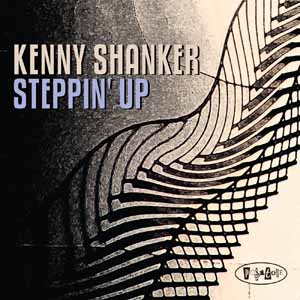
On his hard-hitting debut CD, alto saxophonist Kenny Shanker shows off a big, ripe  sound that brings Kenny Garrett and Jan Garbarek to my mind at times. That sound is consistently put into service during persuasive, committed solos — Shanker has a lot of bop under his fingers (and some Garrett-style lines too) and has no problems revving up to top gear when he improvises.

As a composer, Shanker creates direct, uncomplicated meat-and-potatoes fare — all the better for him to unleash strong stuff when he solos. A good chunk of Steppin’ Upis  pop- and gospel-influenced (the down-home opener Winter RainHome Sweet Home, the pretty, quarter-notey ballad Sarah). Quirk is a groovy, Garrett-style tune. The rocking Rhapsody strives to be grand and, well, rhapsodic — I don’t find it says that much to me, however.

On the swinging side of things, Fifth & Berry is a brisk, mostly minor blues, with guitarist Lage Lund contributing the first of three guest appearances. The guitarist also enlivens E.J., a charging tune, which features a swaggering half-time solo by pianist Art Hirahara before the music becomes more crowded. Lund returns onSaints, another multi-groove tune, and his playing on that track might be one of the disc’s highlights — the beginning of the solo feels more patient than much of Steppin’ Up.  Prowl is a jazz waltz that could have been better shaped, although Hirahara delivers a strong solo.

The disc closes with a rendition of Leonard Bernstein’s Somewhere. Shanker sings the melody directly through his horn, and pianist Mike Eckroth expresses himself well.

Steppin’ Up clearly conveys the heat and power of Shanker’s music. Indeed, it feels to me like the recording, mixing and mastering meant to stress the punchiness of the proceedings — at the expense, I think, of more varied, nuanced expression. For comparison’s sake, drummer Bryan Fishler comes off as more rigid and brash than he does on Sullivan’s disc. Probably that’s more a function of the recording, rather than what Fishler played.

Posted on

ejazznews reviews Nick Hempton “The Business”….

ejazznews.com

Nick Hempton “The Business”

Oct 5th, 2011 

By: Edward Blanco

Leading the Nick Hempton Band on their second album and first on the Posi-Tone label, saxophonist Hempton guides his able quintet through a selection of highly entertaining, hard-driving and solid swinging modern jazz tunes that’s all business. Whether on the tenor or alto saxophones, Hempton is equally steamy, smooth and sophisticated demonstrating fiery moves on such burners as “Press One For Bupkis,” the opening “Flapjacks In Belo” and on the bright “From Bechet, Byas, And Fats.”

Renowned pianist Art Hirahara and guitarist Yotam Silberstein are joined by bassist Marco Panascia and drummer Dan Aran to form one of the finest rhythm sections in the business. Together, they have been providing the musical support for Hempton since 2005 and on this second recording, distinguish themselves with their play.

With the help of tasty bass work from Panascia, Hempton is especially expressive on the light “Encounter At E” followed by more warm touches on “Cold Spring Fever,” this time aided by Silberstein’s playful guitar picks and solo. Hirahara introduces the Hempton original “Not Here For A Haircut,” a piece that evolves quickly into one of the other sizzling numbers of the set where the saxophonist tees off with some of his best solo work.

The saxophonist shows a glimpse of his bluesy side on the Don Redman standard “Gee Baby, Ain’t I Good To You” and finishes the session with the brief but hard-hitting “Carry On Up The Blues,” an original that’s more hard bop than straight blues. There are many highlights on this well-balanced program that will provide many moments of musical pleasure for those who sample the disc. Nick Hempton is neither flashy nor withdrawn, but rather creative, intense and superb delivering The Business in high-quality fashion.